


If you’ve ever watched your toddler attempt to scale the back of the couch for the fifth time before breakfast, you’ve probably wondered what makes climbing so irresistible.
You help them down, turn around for a moment, and there they are again, halfway to the top. Meanwhile, the cushions have become stepping stones, the ottoman is apparently a mountain, and every piece of furniture presents a fascinating new challenge.
As parents, our first instinct is often to redirect the behavior. And understandably so. Kitchen counters and bookshelves aren’t exactly designed for little climbers.
But what if, instead of asking only how to stop the climbing, we also asked why children are so drawn to it?
Because beneath all that reaching, gripping, balancing, and scrambling, there’s something pretty remarkable happening. Children are learning how their bodies work, what they’re capable of, and how to navigate the physical world around them.
And climbing gives them plenty to figure out.
There’s a lot happening behind that little climb
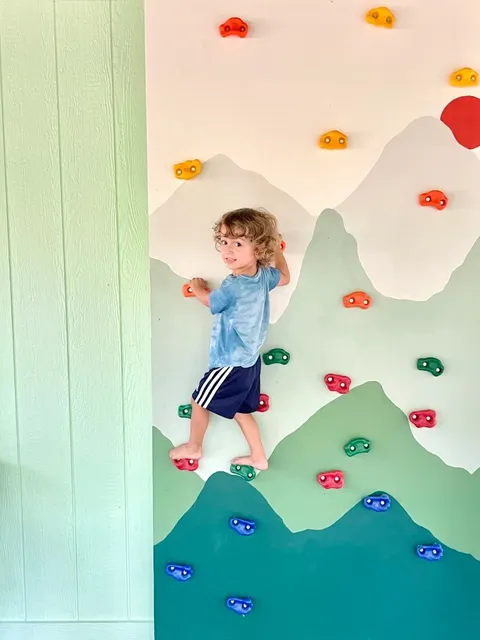
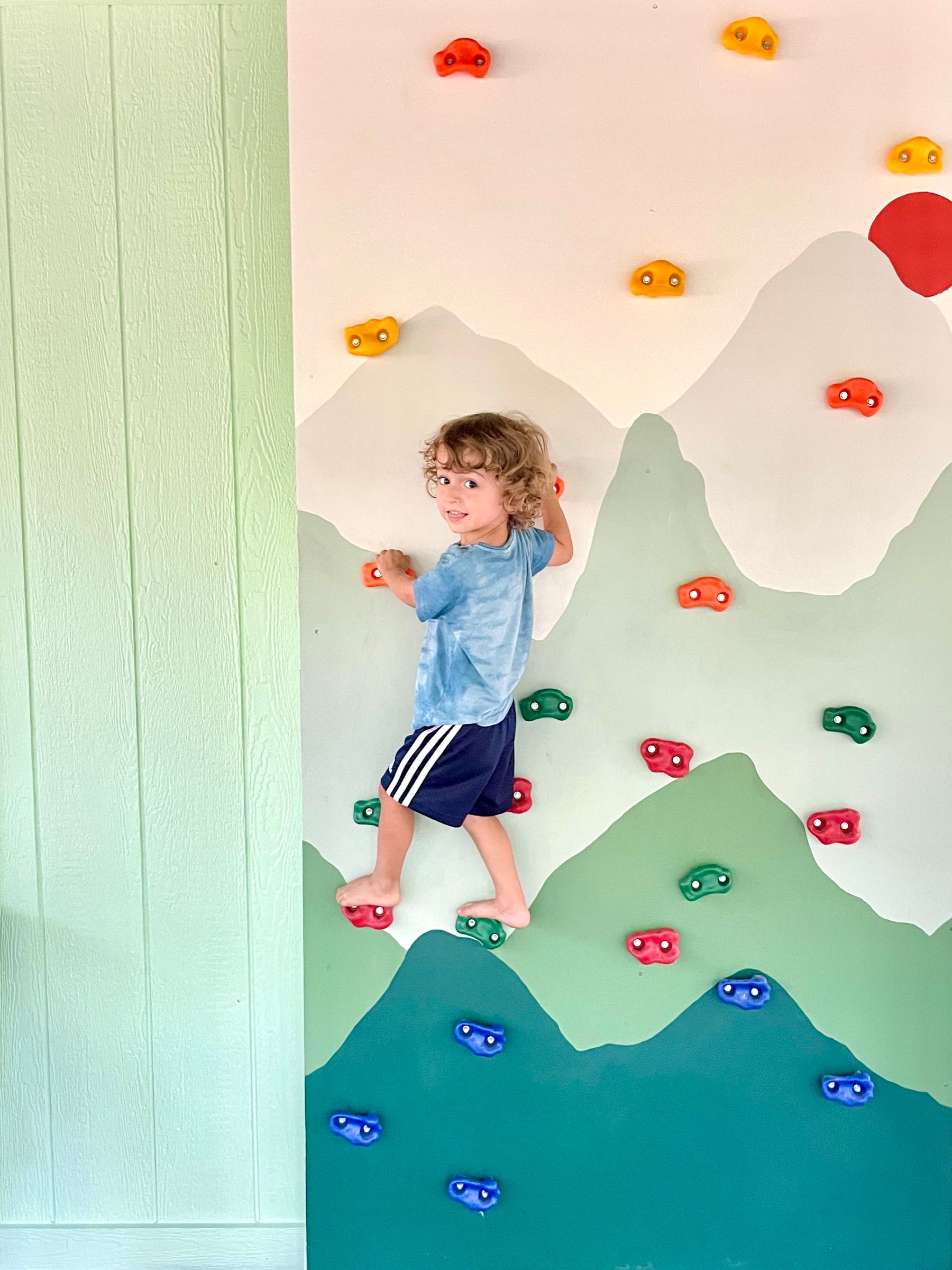
Imagine watching a child approach a climbing wall for the first time. They look up, reach for a hold, and tentatively lift one foot. Perhaps they pause, shift their weight, or try a different route before making their next move.
To us, it looks like climbing. To their developing body, it’s a fascinating exercise in coordination, balance, and problem-solving.
One of the systems involved is proprioception, sometimes described as the body’s internal sense of position and movement. Information from muscles, joints, and tendons helps children understand where their arms and legs are without constantly looking at them. It’s what allows a child to reach for the next climbing hold, adjust their grip, or move a foot onto a step.
Then there’s the vestibular system, located in the inner ear. It helps detect head movement and orientation relative to gravity, working alongside vision and proprioception to support balance and postural control. Every time a child leans sideways, shifts their weight, or looks up while climbing, these systems work together to help them stay oriented.
And of course, there’s the challenge of figuring out how to get from here to there.
This involves motor planning, the ability to organize and carry out movements toward a goal. A child might realize that a climbing hold is too far away, adjust their position, and try another route. What looks like a little hesitation is often an opportunity to practice adapting a movement plan.
The American Academy of Pediatrics’ report The Power of Play emphasizes the importance of developmentally appropriate play in supporting children’s physical, cognitive, and social-emotional development. Physical play gives children opportunities to practice fundamental motor skills, including climbing, balancing, and coordinating their movements.
So while we might see another attempt to conquer the furniture, children may be exploring strength, coordination, spatial awareness, and a growing understanding of what their bodies can do.
And that makes climbing much more interesting than it first appears.
Why do some children seem to need so much movement?
Some children are happiest when they’re climbing, jumping, pushing, pulling, or carrying something from one side of the room to the other. They might drag every cushion off the couch, build an elaborate obstacle course, and then spend the next half hour launching themselves into it.
Others prefer gentler movement or shorter bursts of activity. And the same child might seek different experiences depending on the day.
These differences can be partly understood through the way children experience and respond to sensory information.
In pediatric occupational therapy, you may hear the term heavy work. It describes activities that involve muscles and joints working against resistance, such as pushing, pulling, carrying, climbing, or crawling through obstacles.
These activities provide proprioceptive input, giving children information about their body’s position, movement, and effort. Some children find this kind of movement particularly satisfying, while others may prefer swinging, balancing, or quieter activities.
There’s no single activity that works the same way for every child, and movement doesn’t always have a calming effect. Sometimes it helps a child feel more settled; other times, it’s simply exciting and fun.
But there’s another interesting reason to value physical play, especially when it involves a little problem-solving.
A 2024 systematic review and meta-analysis of 23 randomized studies involving 2,857 children and adolescents examined physical activities that also incorporated cognitive challenges. The researchers found improvements in aspects of executive function, including working memory and inhibitory control.
Executive functions are the mental skills that help children remember instructions, adjust their plans, manage impulses, and work toward goals.
The research doesn’t mean that every climbing session will improve attention or that movement is a guaranteed way to help a child regulate. The studies examined structured interventions rather than ordinary play at home. Still, they offer an interesting perspective on activities that engage both the body and the mind.
Think about a child navigating a climbing wall. They need to remember where they’re going, decide which hold to reach for, and change their approach when something doesn’t work. They’re moving, but they’re also thinking.
And perhaps that’s part of what makes these little physical challenges so compelling.
When children climb, they’re not just discovering how high they can go. They’re discovering what their bodies can do.
The goal isn’t to stop the climbing. It’s to give it somewhere to go.
Of course, understanding why children love climbing doesn’t make the kitchen counter an appropriate playground.
Children need boundaries, supervision, and opportunities for movement that are suited to their age, abilities, and environment. The goal isn’t to encourage climbing on everything. It’s to recognize the interest behind the behavior and find a more appropriate place for it.
If your child constantly climbs the furniture, it might be worth noticing what they seem to enjoy most. Is it the challenge of reaching somewhere higher? The feeling of pulling themselves up? The balance required to navigate an uneven surface? Or the satisfaction of figuring out a tricky route?
Different activities offer different experiences, and observing what draws your child in can help you decide what to introduce next.
A child who loves balancing might enjoy low stepping stones or balance blocks. One who constantly pushes furniture around might enjoy moving a laundry basket filled with soft toys. And a child fascinated by climbing may benefit from age-appropriate climbing opportunities designed specifically for that purpose.
The idea isn’t to fill every moment with structured activities. It’s to create an environment where children have interesting, appropriate ways to explore movement as part of everyday play.
And sometimes, a little imagination makes those opportunities even more inviting.
How we apply this in a Little Space
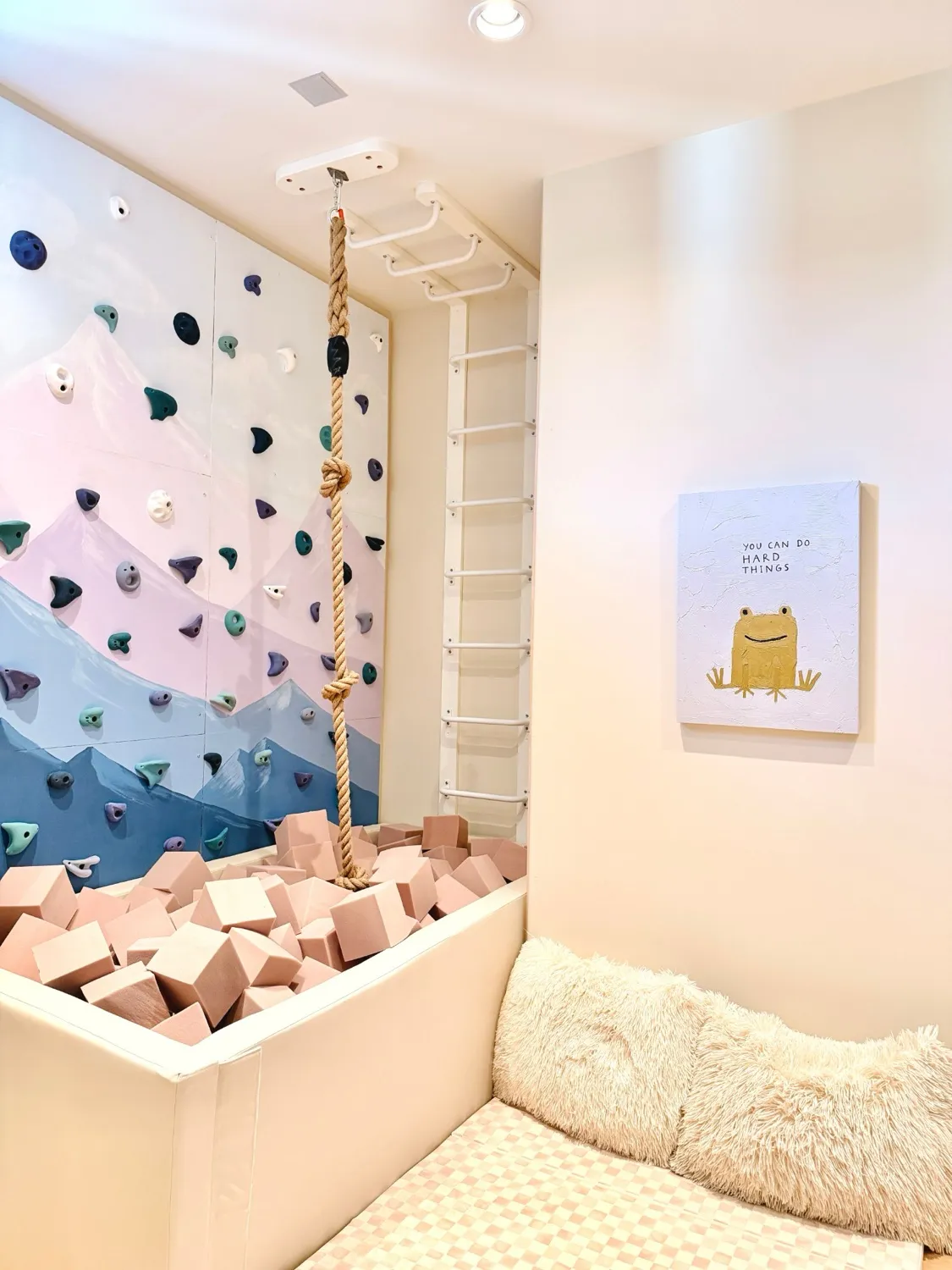
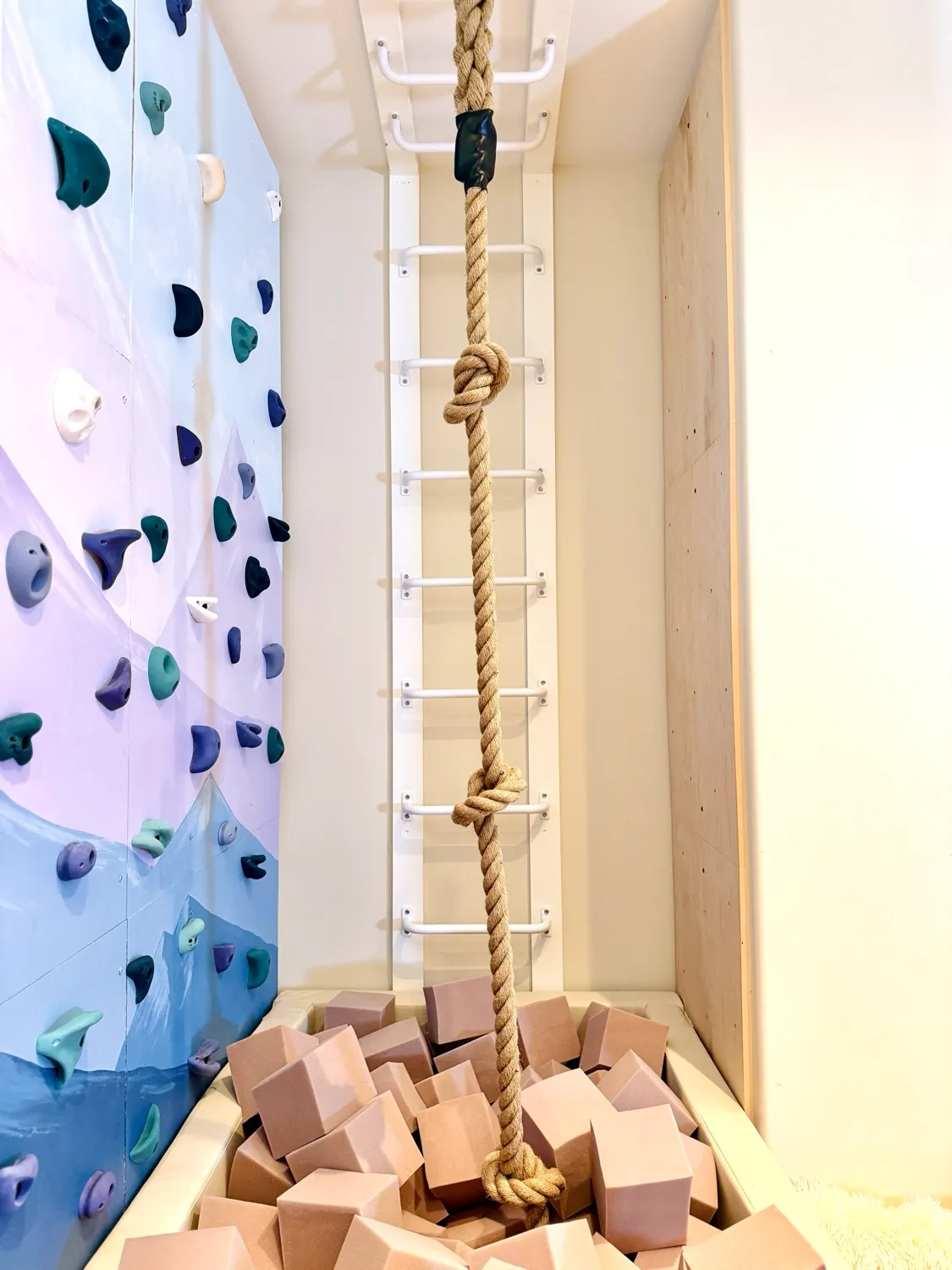
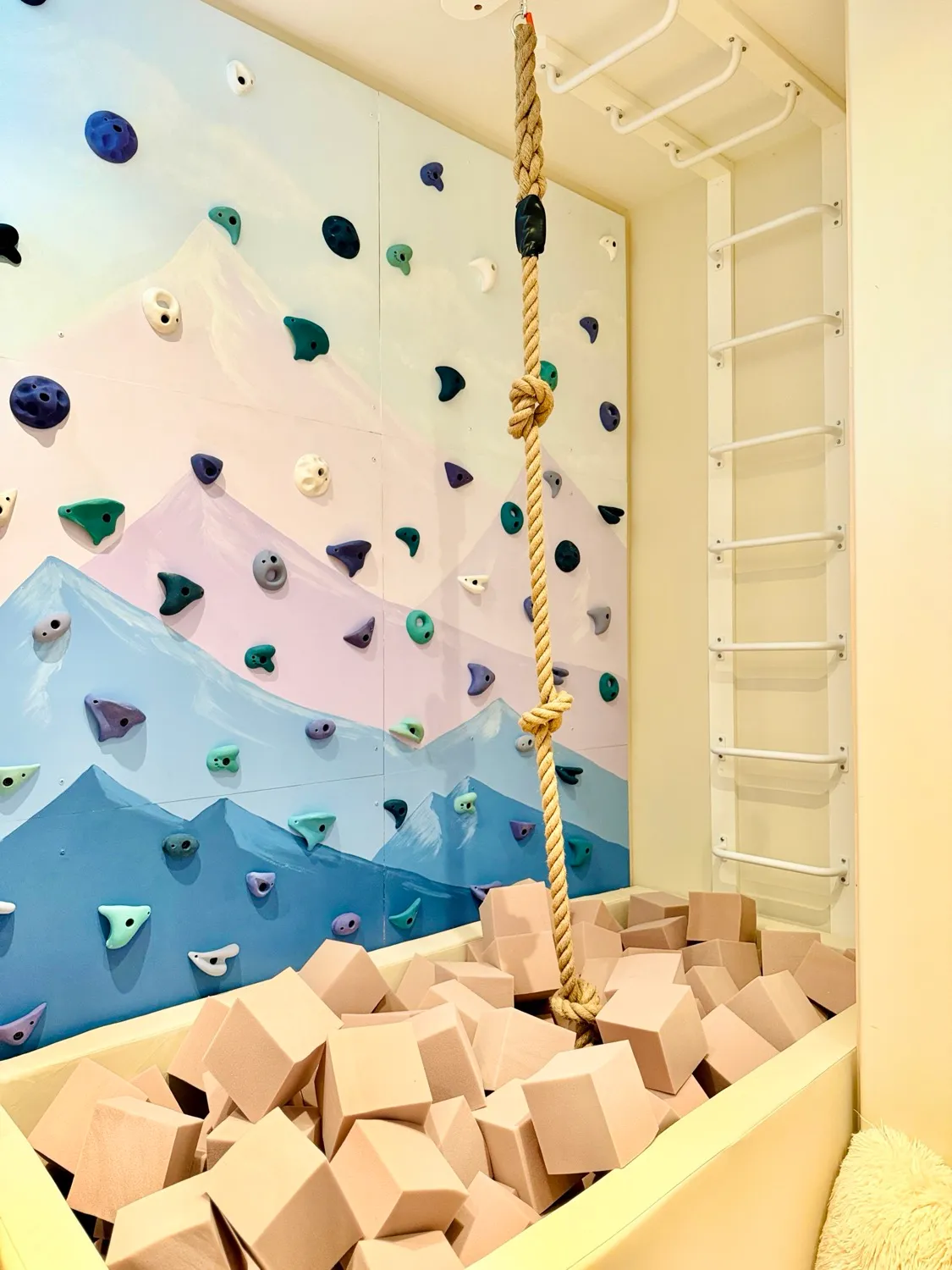
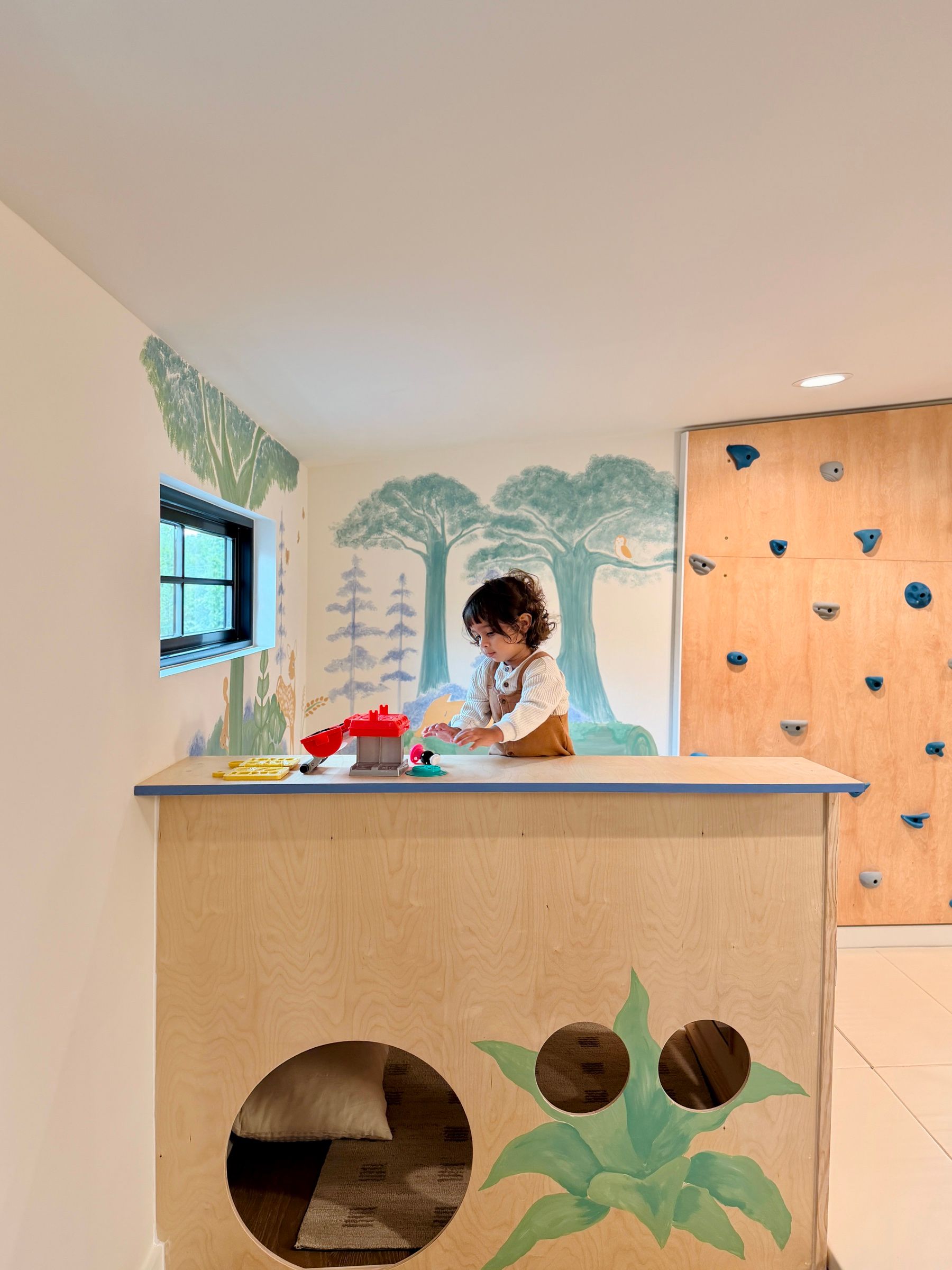
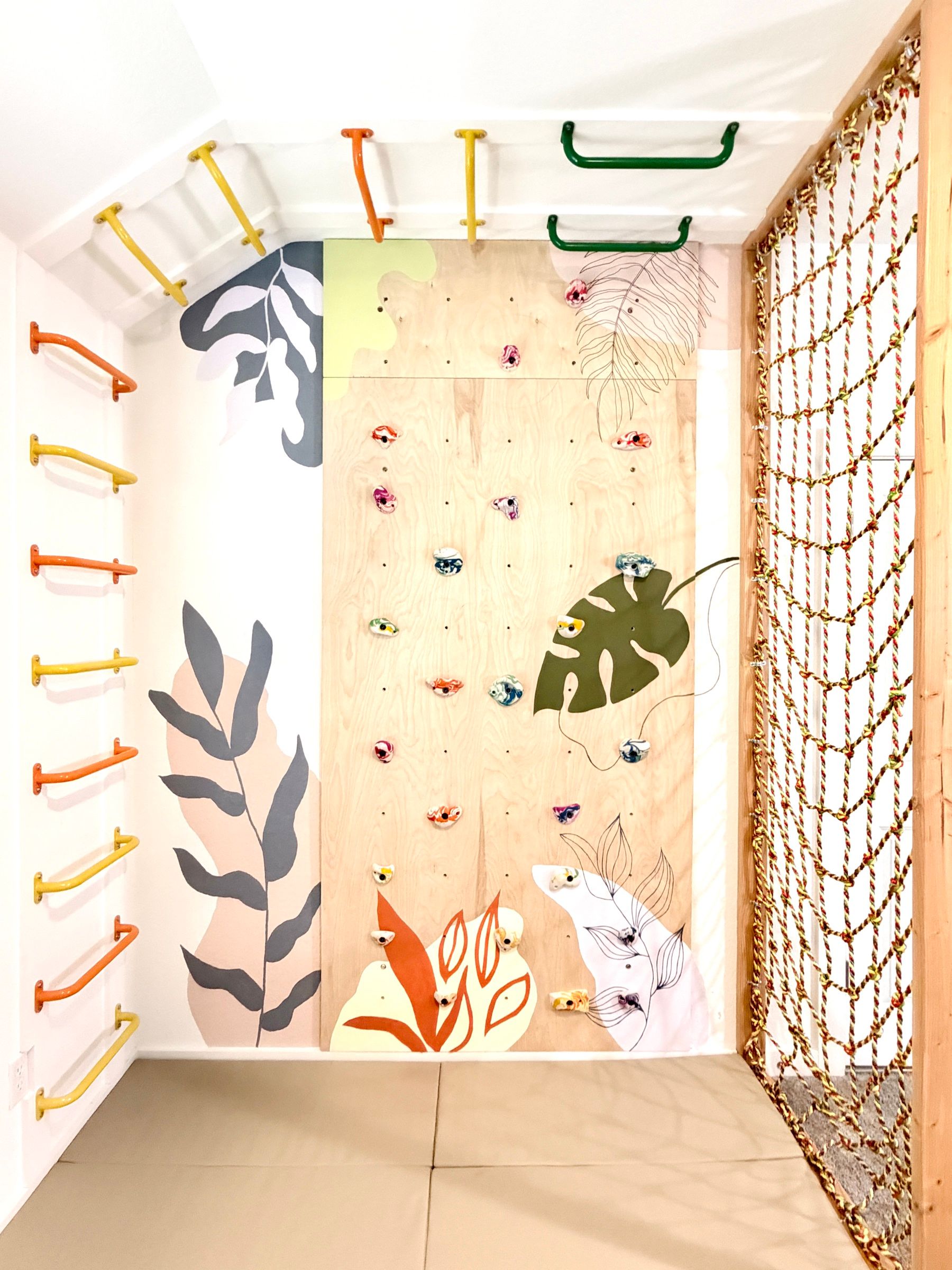
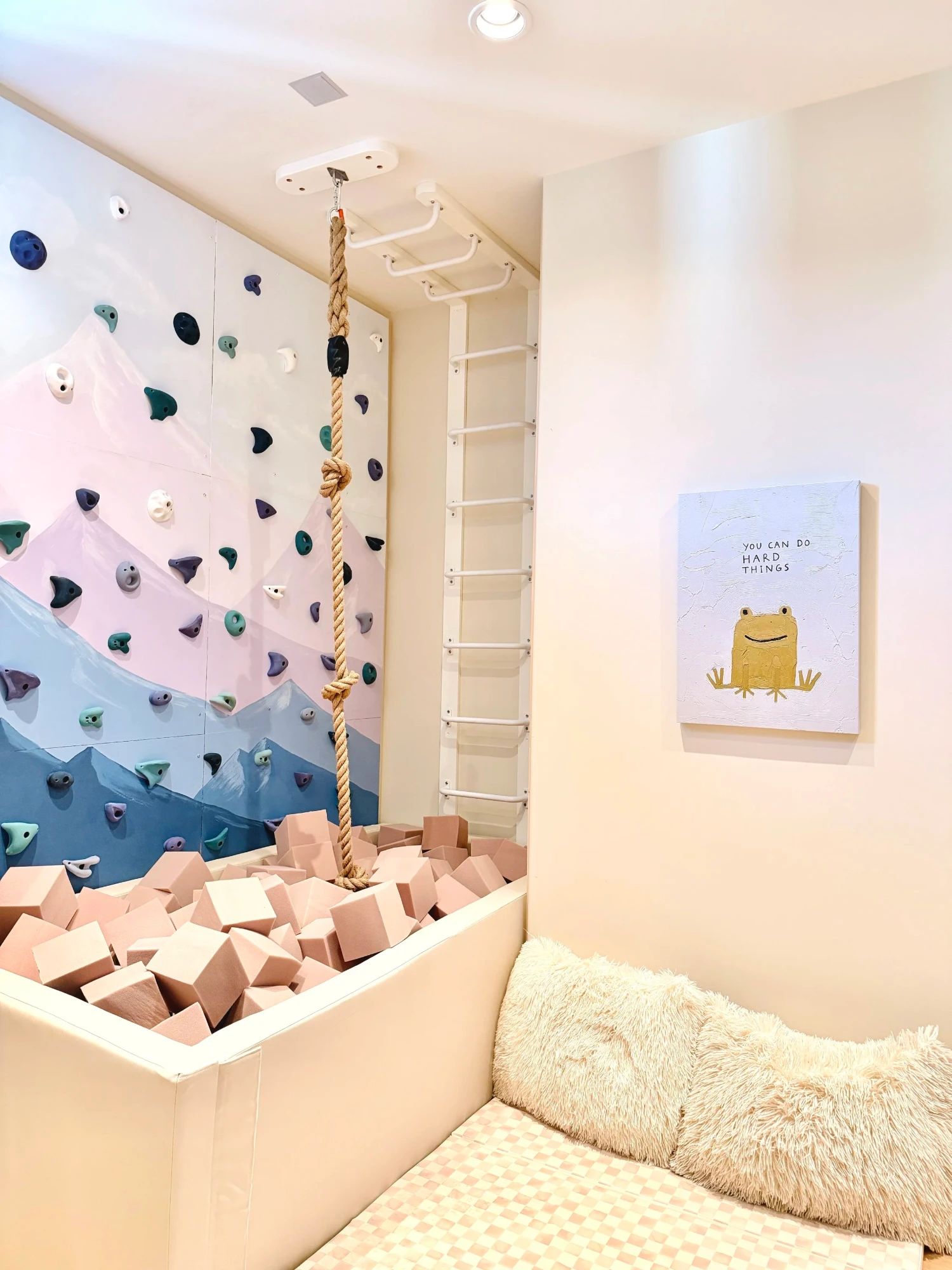
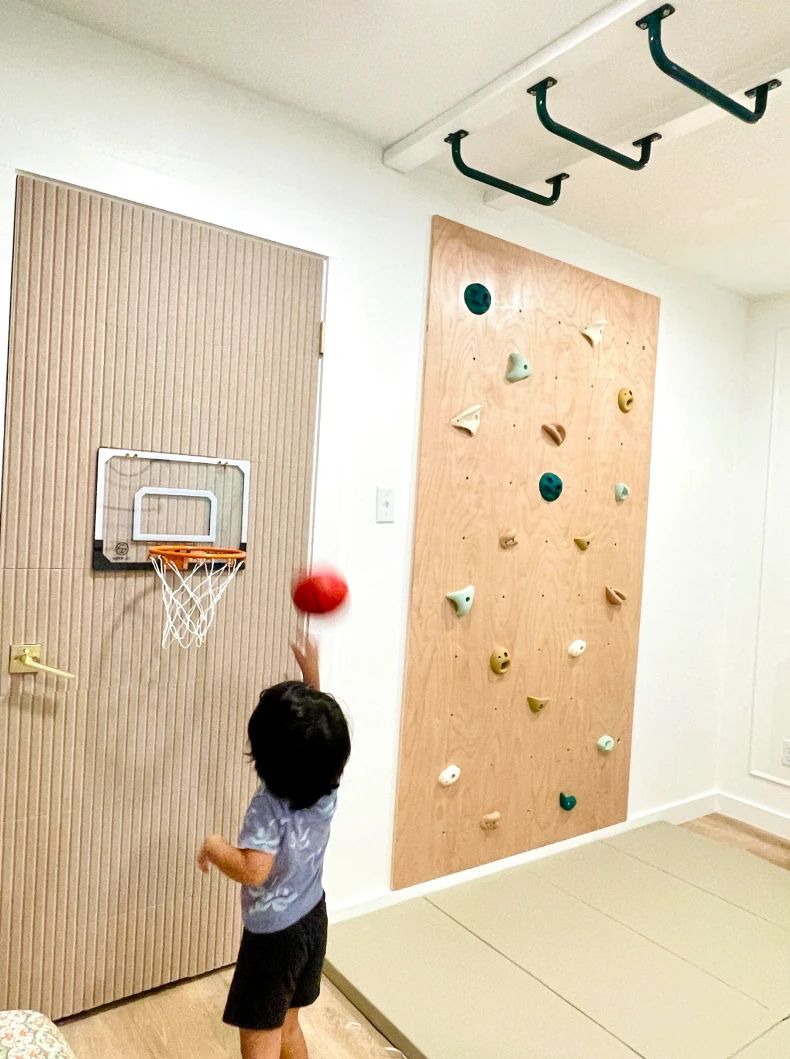
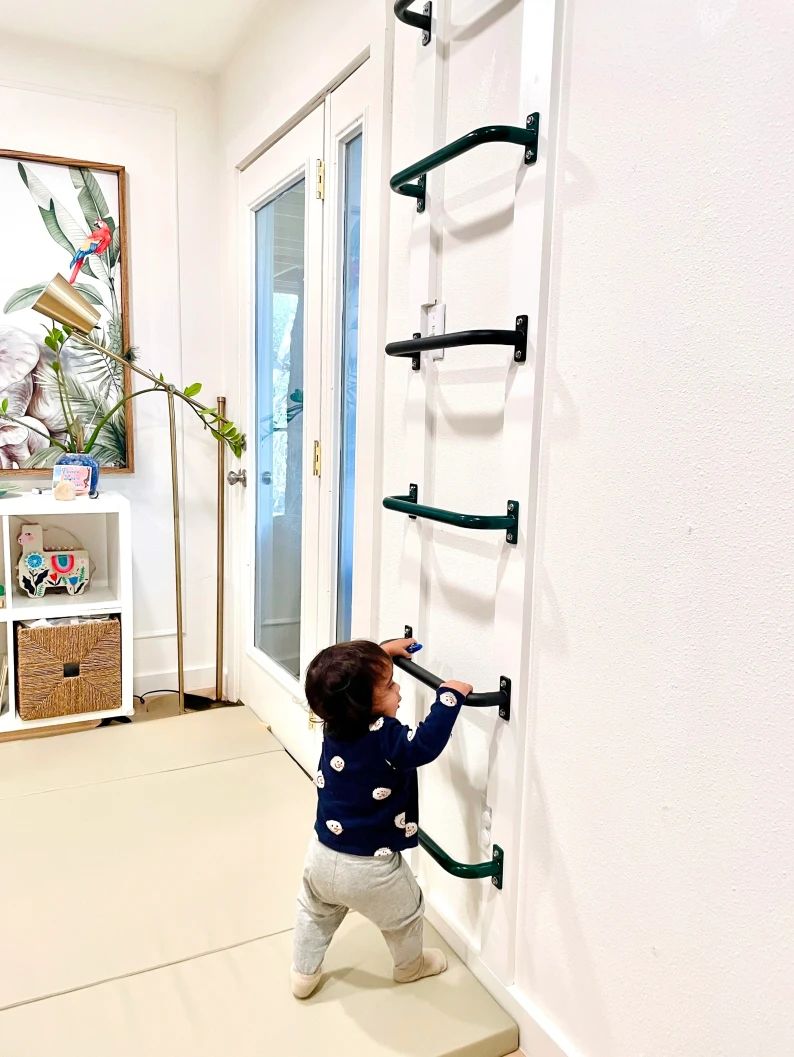
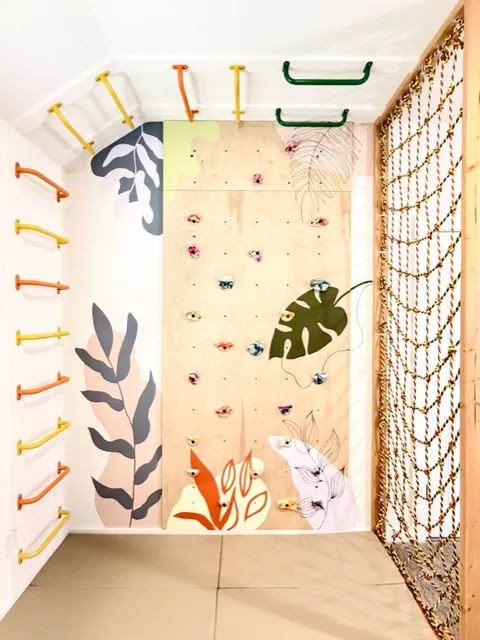
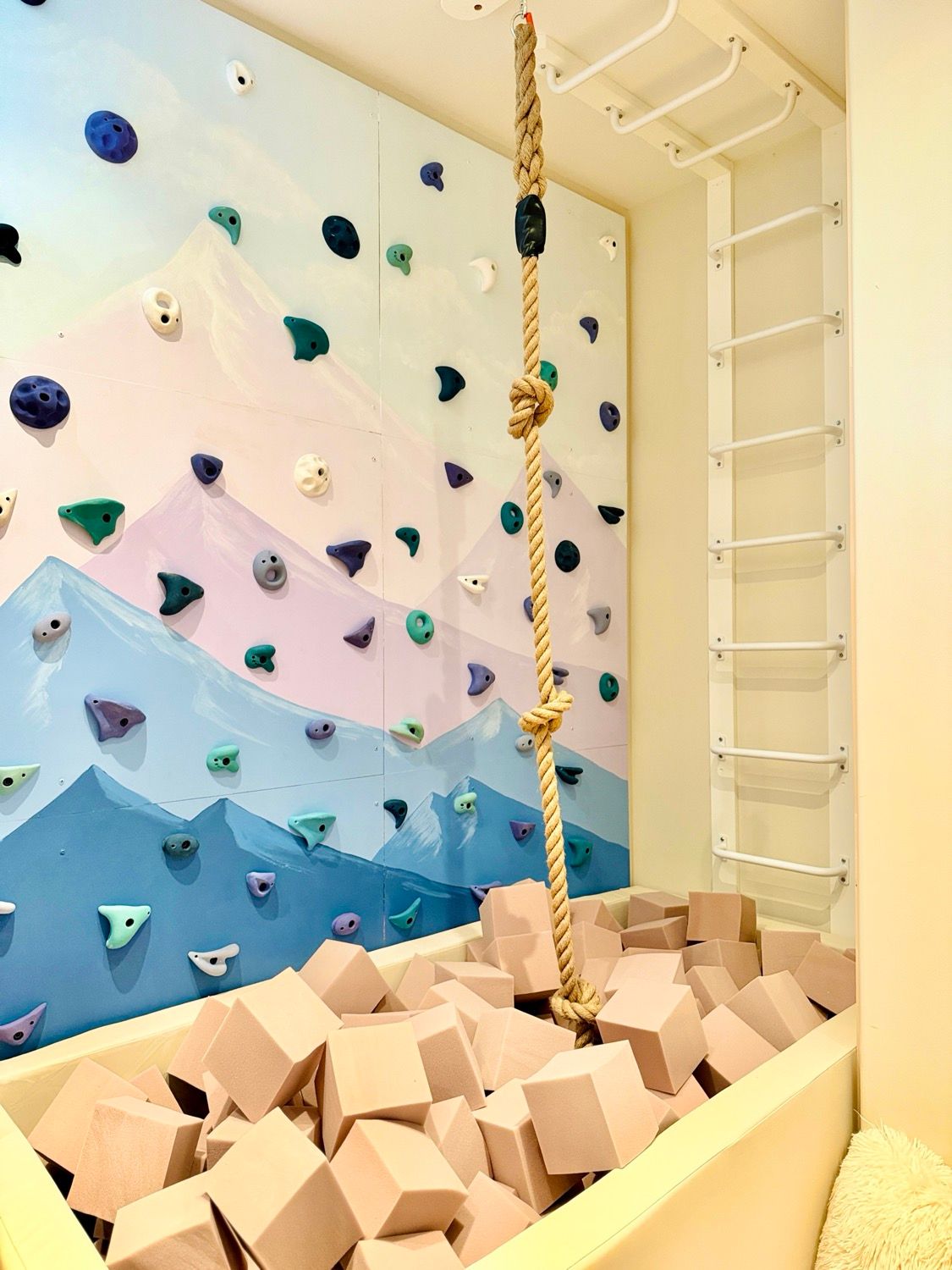
In one of our Little Spaces playrooms, we created a dedicated movement zone with climbing walls, monkey bars, a climbing rope, and a foam pit.
At first glance, it’s an indoor playground. But each element offers a different kind of physical challenge, and together they create opportunities for children to explore movement in different ways.
The climbing wall invites children to reach, grip, shift their weight, and plan a route upward. The monkey bars introduce hanging and upper-body coordination, while the climbing rope offers another way to practice pulling and coordinating movements. The foam pit provides a playful landing area within a setup designed for the activities and heights involved.
What makes this space especially interesting to us, though, is what happens beyond the movement zone.
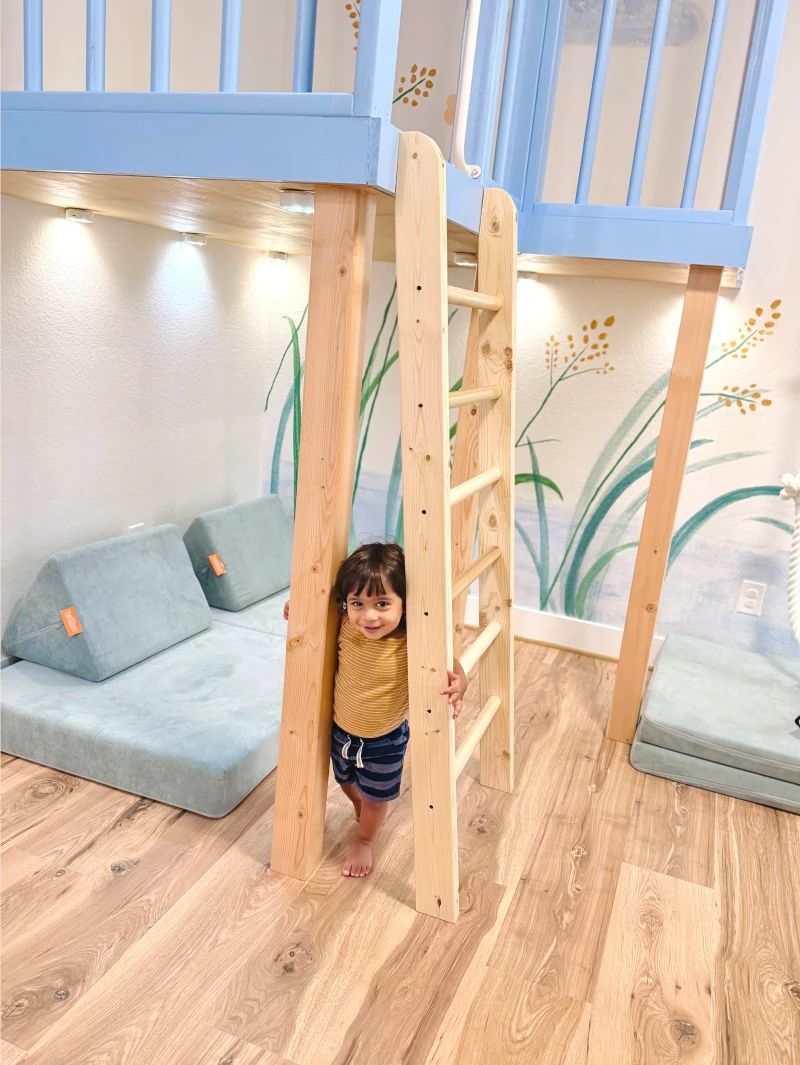
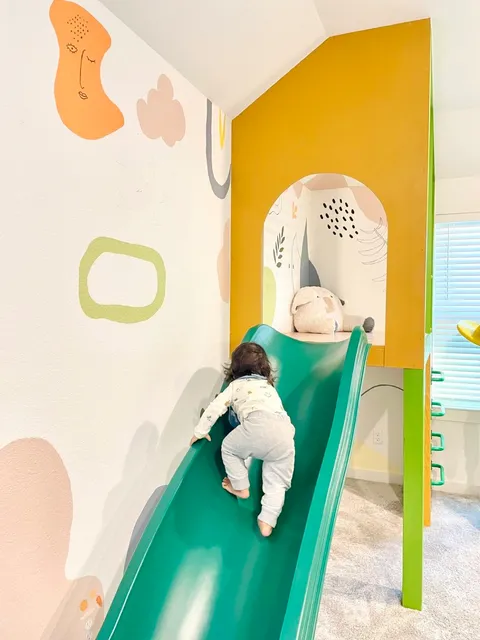
Just a few steps away, there’s a creative corner where the children can draw, build, and experiment. There’s also a cozy reading nook tucked onto the platform, offering a quieter place to spend time.
We wanted the room to welcome big physical adventures without making movement the only thing it had to offer.
A child might spend time working out a climbing route, then wander over to the art table to draw. Later, they might climb up to the reading nook with a favorite book. On another day, the entire movement zone could become part of an elaborate imaginary adventure.
This is what we mean by layered play: creating environments that offer different kinds of experiences and give children room to choose what interests them.
Rather than designing a room around one activity, we think about how movement, imagination, creativity, and quieter moments can exist together.
Because even the most enthusiastic little climber isn’t always in the mood to climb.
A little room to move
There's something wonderful about watching a child figure out a new physical challenge.
Maybe it's the first time they balance across a stepping stone without reaching for your hand, or the moment they discover a different way up the climbing wall. Sometimes the accomplishment is barely noticeable to anyone else, but to them, it's enormous.
These experiences give children opportunities to practice coordination, explore their abilities, and build confidence through experience. And often, they're simply having a wonderful time.
We don't need to turn every movement into a lesson or every afternoon into a carefully planned activity. But we can pay attention to what children are naturally drawn to and create opportunities for them to explore those interests in appropriate ways.
Because sometimes, when a child climbs the same thing for the tenth time, they're not looking for something new to do.
They're enjoying the challenge of doing it again.
And that's a pretty lovely part of growing up. 💛
- Yogman, M., et al. (2018). The Power of Play: A Pediatric Role in Enhancing Development in Young Children. Pediatrics, American Academy of Pediatrics. Reaffirmed January 2025. Explores the role of developmentally appropriate play in supporting physical, cognitive, and social-emotional development. Read the report
- Mao, F., Huang, F., Zhao, S., & Fang, Q. (2024). Effects of Cognitively Engaging Physical Activity Interventions on Executive Function in Children and Adolescents: A Systematic Review and Meta-Analysis. Frontiers in Psychology. Examines the relationship between cognitively engaging physical activity and executive-function outcomes. Read the study
- Systematic Review of Sensory-Based Interventions for Children and Youth (2015–2024). (2025). Frontiers in Pediatrics. Reviews evidence for sensory-based approaches, including deep-pressure interventions, while identifying limitations and gaps in the research. Read the review