
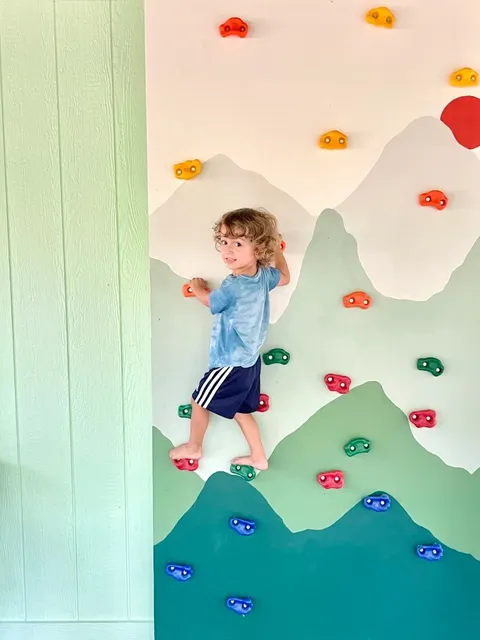


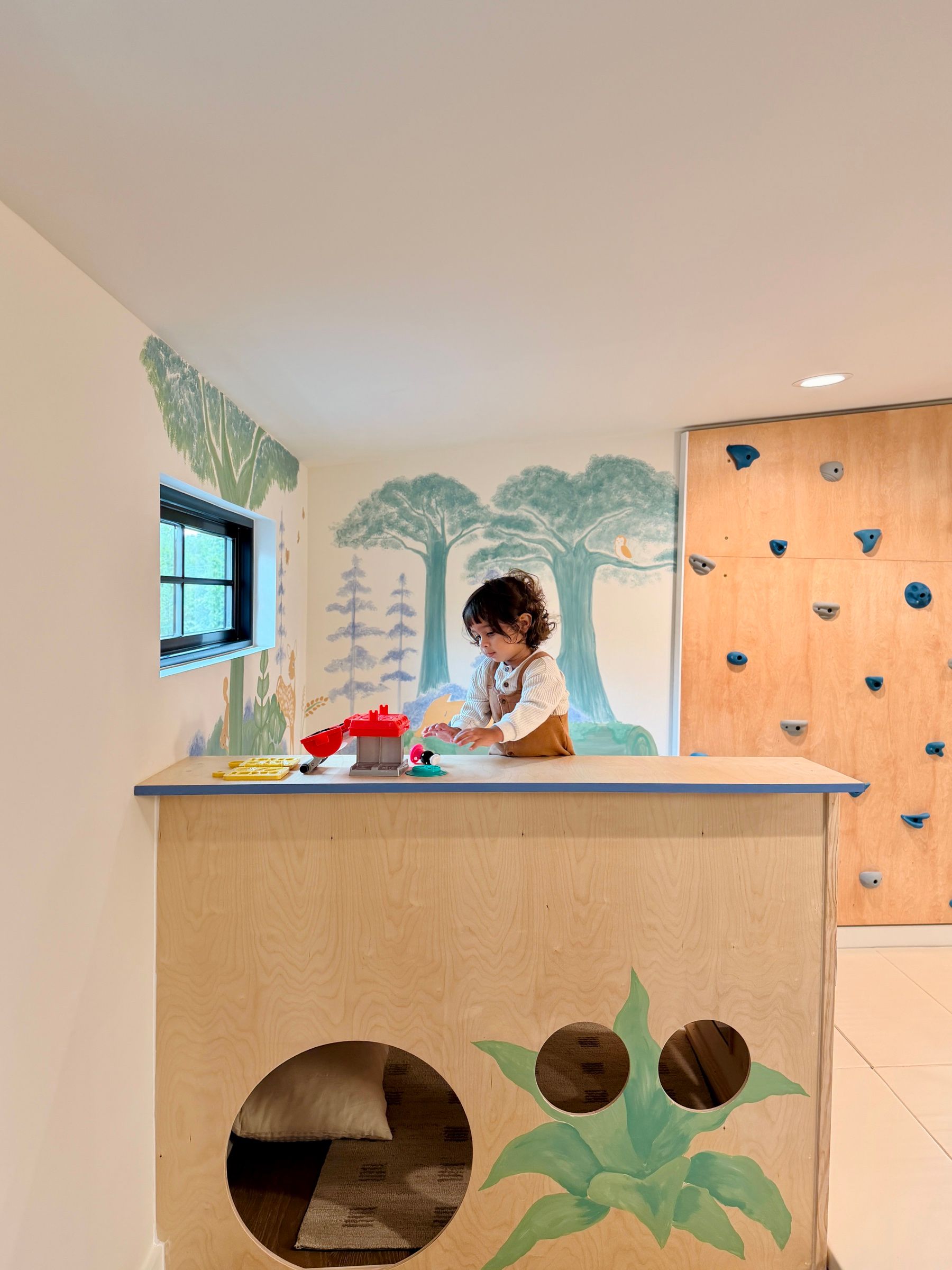
We’ve all heard the advice: Choose furniture that grows with them. Design a room they’ll love for years. Invest in pieces they won’t outgrow.
It’s good advice, of course. But somewhere between the convertible cribs and adjustable desks, we started wondering what it actually means for a playroom to grow with a child.
Because children don’t just grow taller. They become stronger, more coordinated, more curious, and wonderfully imaginative. The toddler who once needed help climbing onto the couch might soon be scaling every piece of furniture in sight. The little one who loved hiding under the dining table might turn that same spot into a veterinary clinic, a spaceship, or a secret clubhouse.
And a few years later, that same child might simply want somewhere to curl up with a book or whisper secrets with a friend.
So perhaps a playroom that grows with them isn’t simply one that lasts longer. Perhaps it’s one that keeps offering something new.
At Little Spaces, we call this idea layered play.
One space. A hundred possibilities.
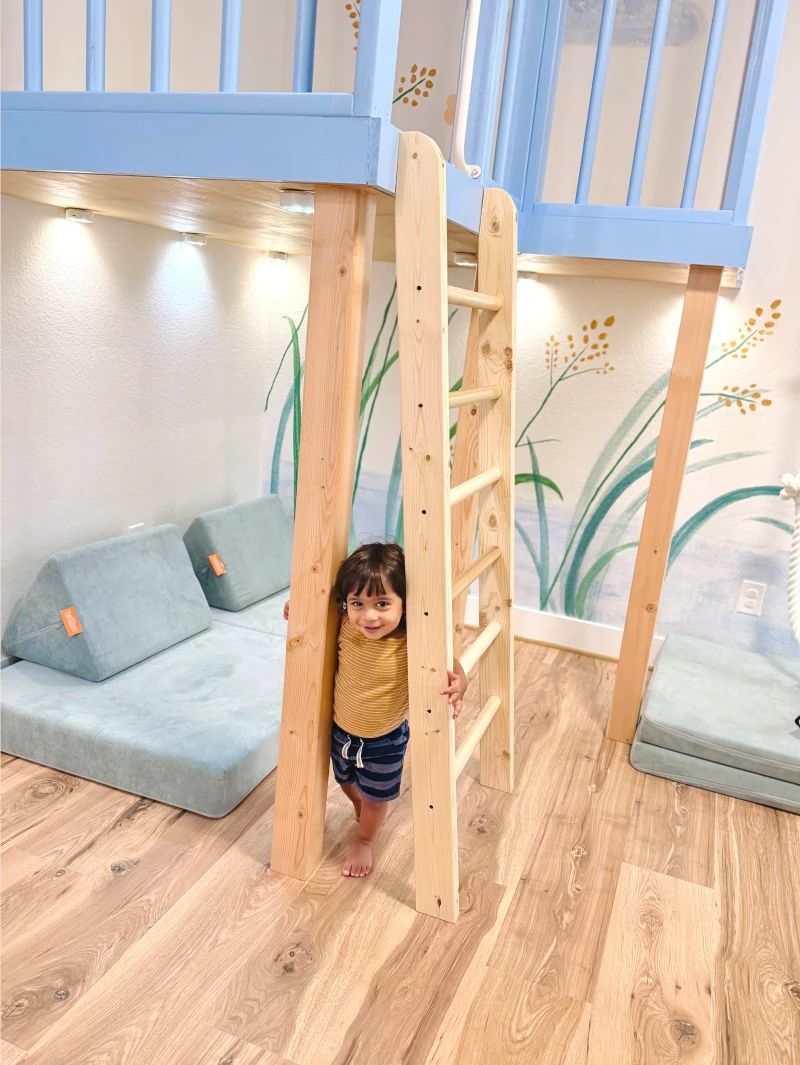
Picture a little wooden platform. At two, it’s a mountain to conquer. At four, it’s a pirate ship sailing through stormy seas. At six, it’s a stage for an elaborate puppet show. And at eight, it might be the perfect perch for a book or an afternoon with friends.
Nothing about the platform has changed, but everything about the child’s relationship with it has.
This is what we love about open-ended design. Rather than deciding exactly how children should use every element, we create opportunities for them to discover their own possibilities. A platform doesn’t have to be just a platform, and a climbing wall doesn’t have to be just a climbing wall.
The interesting part is what happens when children begin combining those possibilities.
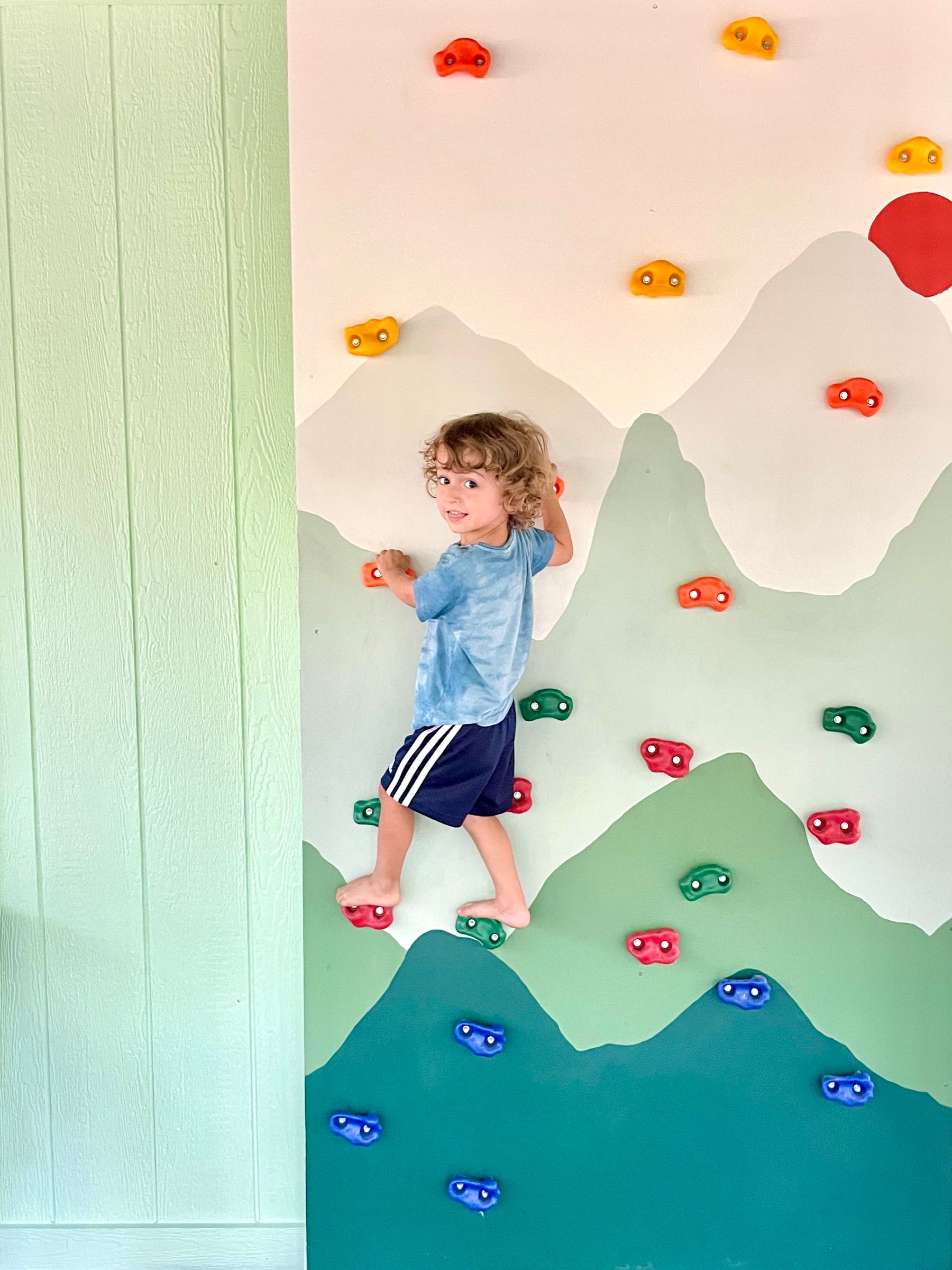
Imagine a child climbing a wall. Their hands are gripping, their feet are searching, and their body is working out where to go next. Now imagine that same child climbing to escape an imaginary crocodile. Suddenly, there’s a story to remember, a problem to solve, and perhaps an entirely new route to invent.
Researchers have been exploring the relationship between movement, thinking, and play. A 2024 systematic review of 23 randomized studies found that physical activities incorporating cognitive challenges were associated with improvements in executive-function skills, including working memory and inhibitory control. These are the skills that help children hold information in mind, adjust their plans, and manage impulses.
Research on imagination offers another interesting piece of the puzzle. In a 2016 experimental study, children participating in fantastical pretend-play activities showed improvements in certain executive-function measures compared with the study’s comparison groups.
Neither study tested imaginary crocodiles on climbing walls, and they don’t establish that combining movement and imagination always leads to better outcomes. But they do help explain why we value environments that invite children to engage their bodies and minds in different ways.
A climbing wall might lead to a platform. The platform becomes a castle. The space underneath becomes a dragon’s cave. Before anyone knows it, an entire adventure has begun.
Instead of asking, What activity should we put here? we like to ask, How many different kinds of play could happen here?
That’s the heart of layered play.
A playroom that grows with them isn’t just a room they’ll keep using. It’s a room they’ll keep discovering.
Sometimes they need to climb. Sometimes they need a cave.
Have you ever watched a child move between activities and wondered how they could possibly have so much energy? One minute they’re jumping off cushions, the next they’re building an elaborate restaurant, and five minutes later the chef has abandoned the kitchen to become a superhero.
Children’s interests, energy levels, and sensory needs can shift throughout the day. Sometimes they want to move their bodies. Sometimes they’re absorbed in a creative project. And sometimes they need a quieter place to retreat.
Movement itself offers valuable developmental experiences. Climbing, jumping, pushing, and pulling engage muscles and joints while providing proprioceptive input—the sensory information that helps children understand where their bodies are in space.
A 2024 meta-analysis examining physical activity and executive function in young children found that physical activity interventions can support aspects of executive functioning, with game-based approaches showing promising results.
For some children, active movement may help them feel more settled and ready for something quieter. For others, the same activity might be exciting or energizing. There’s no universal formula, and children don’t necessarily move through activities in a predictable order.
That’s why we design for choice rather than a prescribed sequence.
A thoughtfully layered play space might include:
-
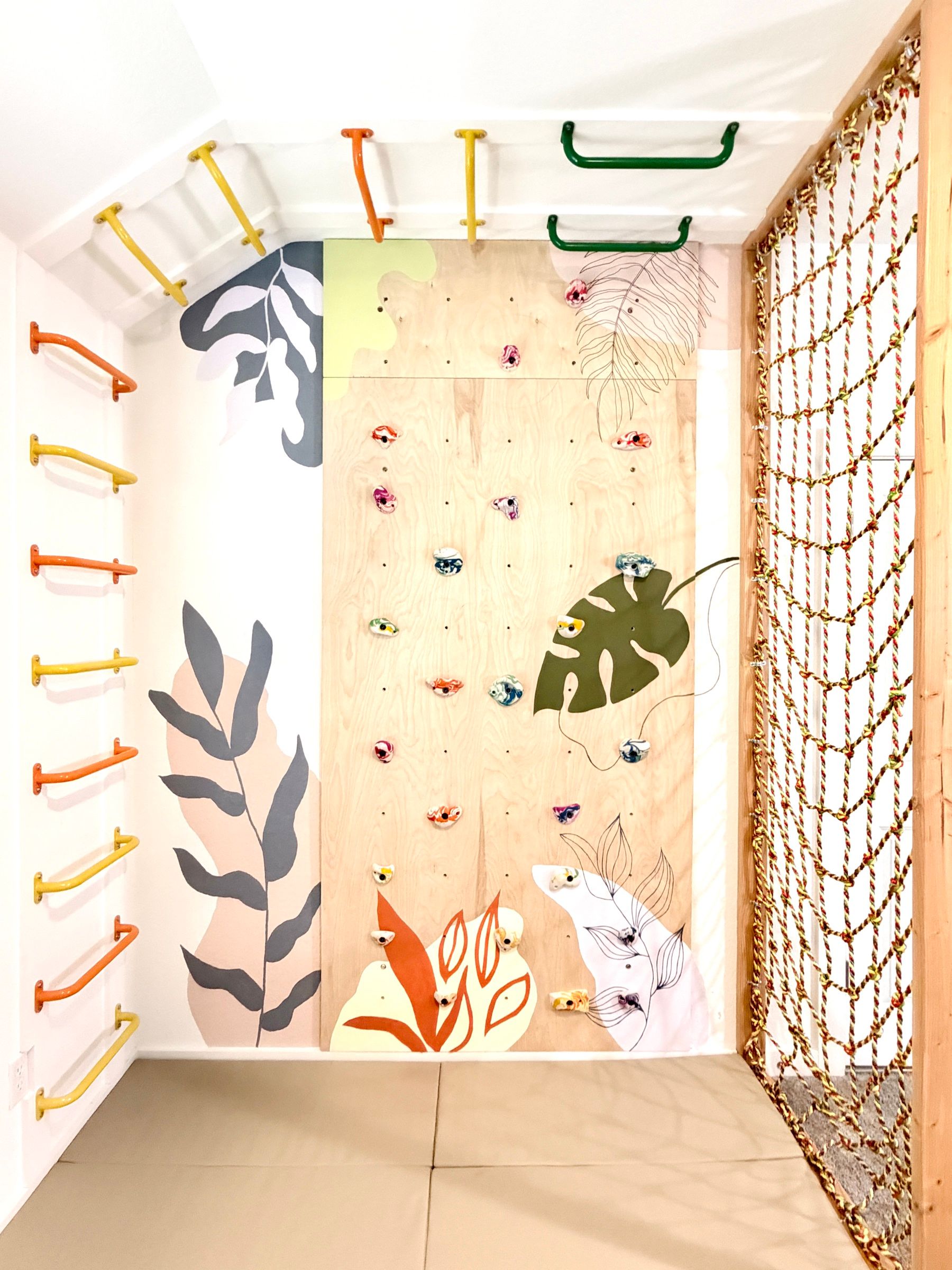
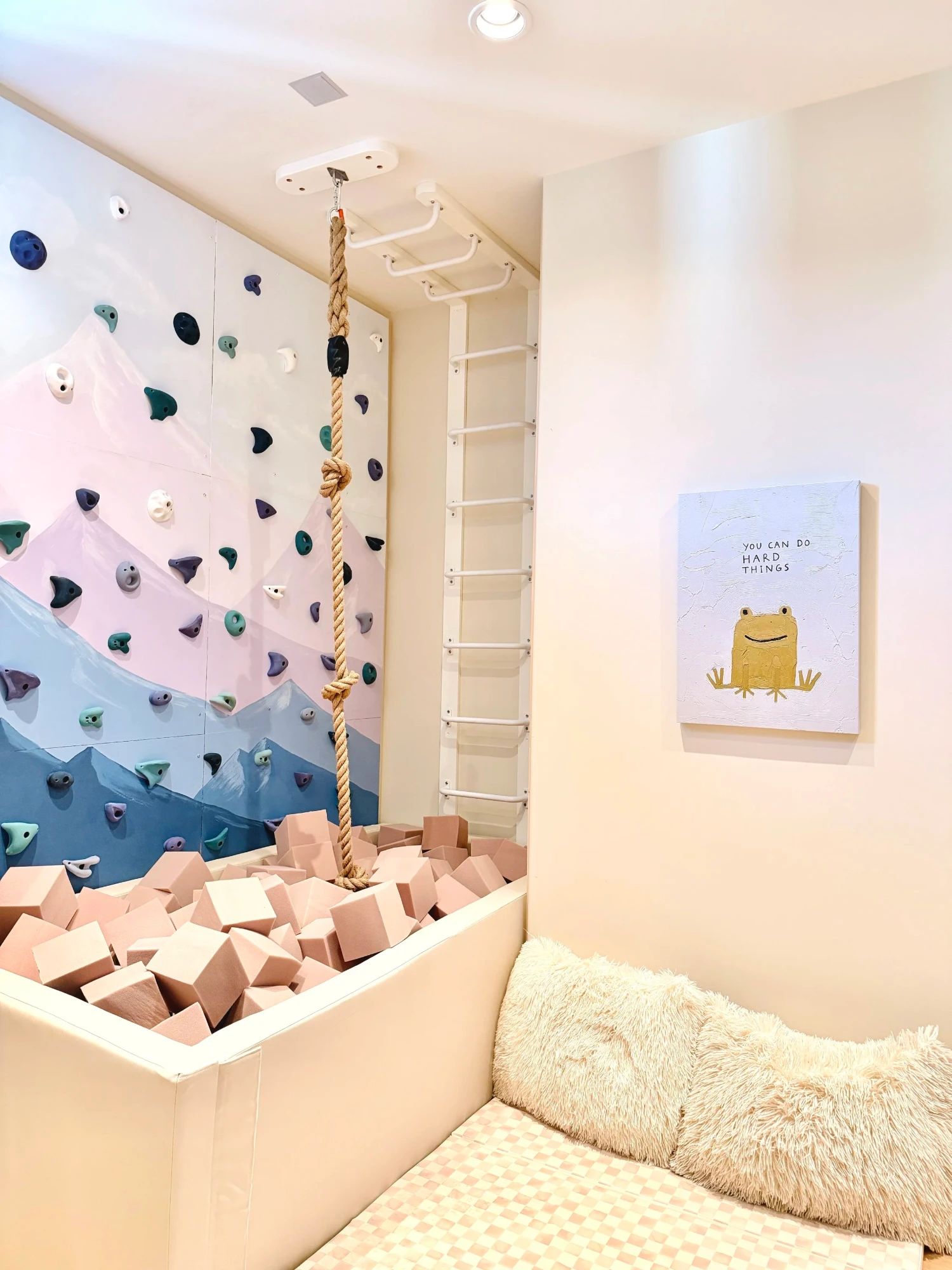
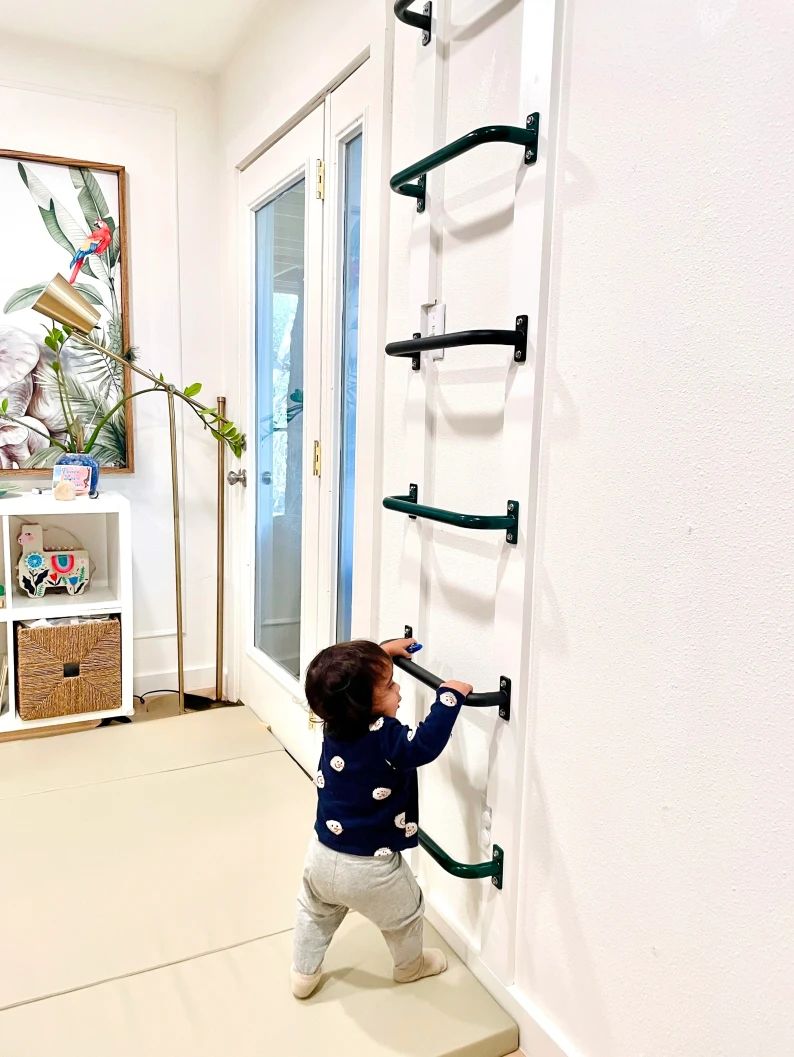
A place to move: Somewhere to climb, swing, jump, or challenge growing bodies.
-
A place to imagine: An invitation to invent characters, adventures, and extraordinary little worlds.
-
A place to create: Room to draw, build, experiment, and bring new ideas to life.
-
A place to retreat: A cozy corner for reading, resting, observing, or simply enjoying a quieter moment.
These don’t have to be four separate rooms or even four separate pieces of equipment. Often, the most interesting spaces bring several experiences together within one thoughtful design.
And children get to decide what happens next.
How we apply this in a Little Space
One of our recent Little Spaces projects began with an interesting challenge: a very low ceiling and two children with very big imaginations.
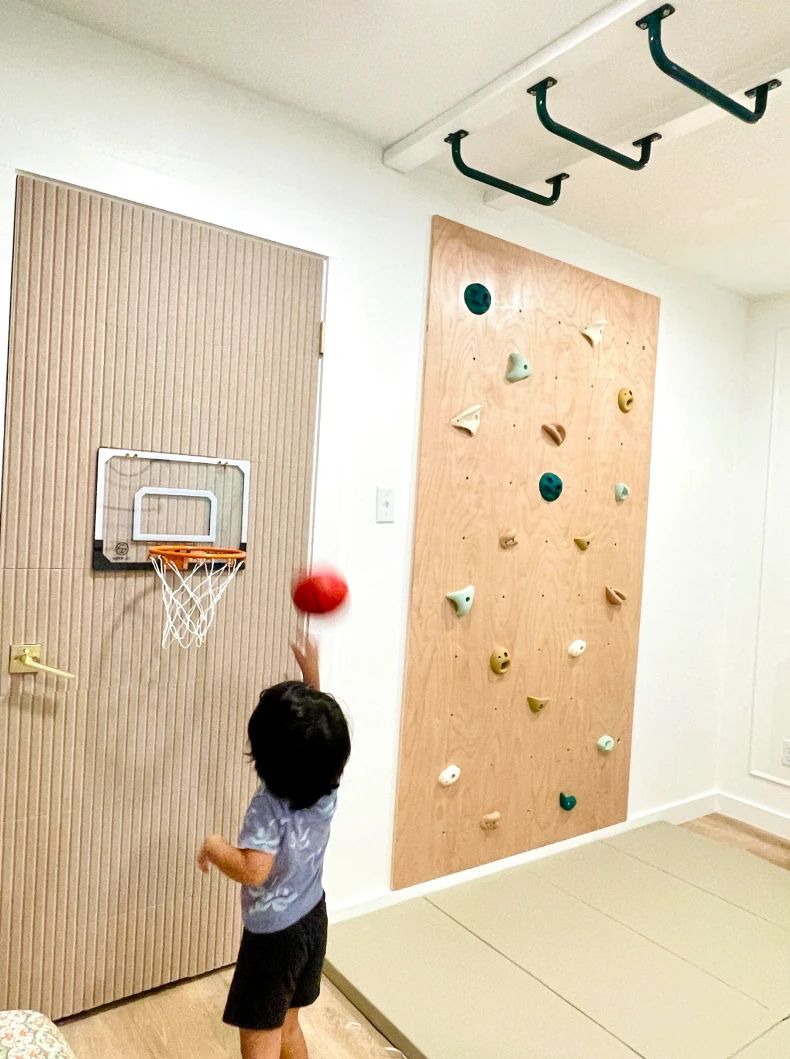
These little adventurers loved to jump. They had plenty of energy and were happiest when they had opportunities to climb, move, and explore. Naturally, we wanted to give them a movement zone that welcomed all that enthusiasm.
But movement was only part of their story. They were also deep in their imaginative-play years, inventing adventures, running pretend restaurants, and inviting their grown-ups into elaborate little worlds.
With limited ceiling height, we couldn’t simply build upward or fill the room with separate equipment for every activity. We needed to make every inch count.
So we designed one low, open-ended platform that could serve several different purposes.
First, it became a launchpad for big movement, with a cushioned landing area designed around the platform’s height and the room’s constraints. It gave the children a dedicated place for the kind of active play they loved.
But we also designed the platform with an accessible ledge for hands-on activities. It could become a surface for building and creating, or transform into a little diner-style counter where the children could take orders and serve imaginary meals to their very important customers.
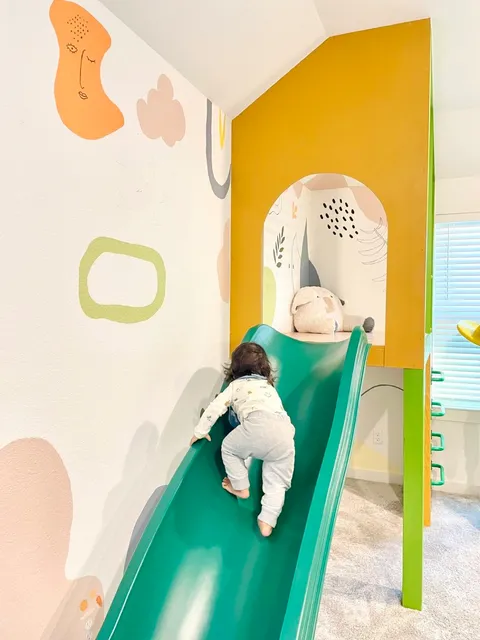
And underneath? We tucked in a cozy little den.
After an afternoon of jumping, climbing, and make-believe, our explorers could retreat into their hideaway, catch their breath, and dream up whatever adventure came next.
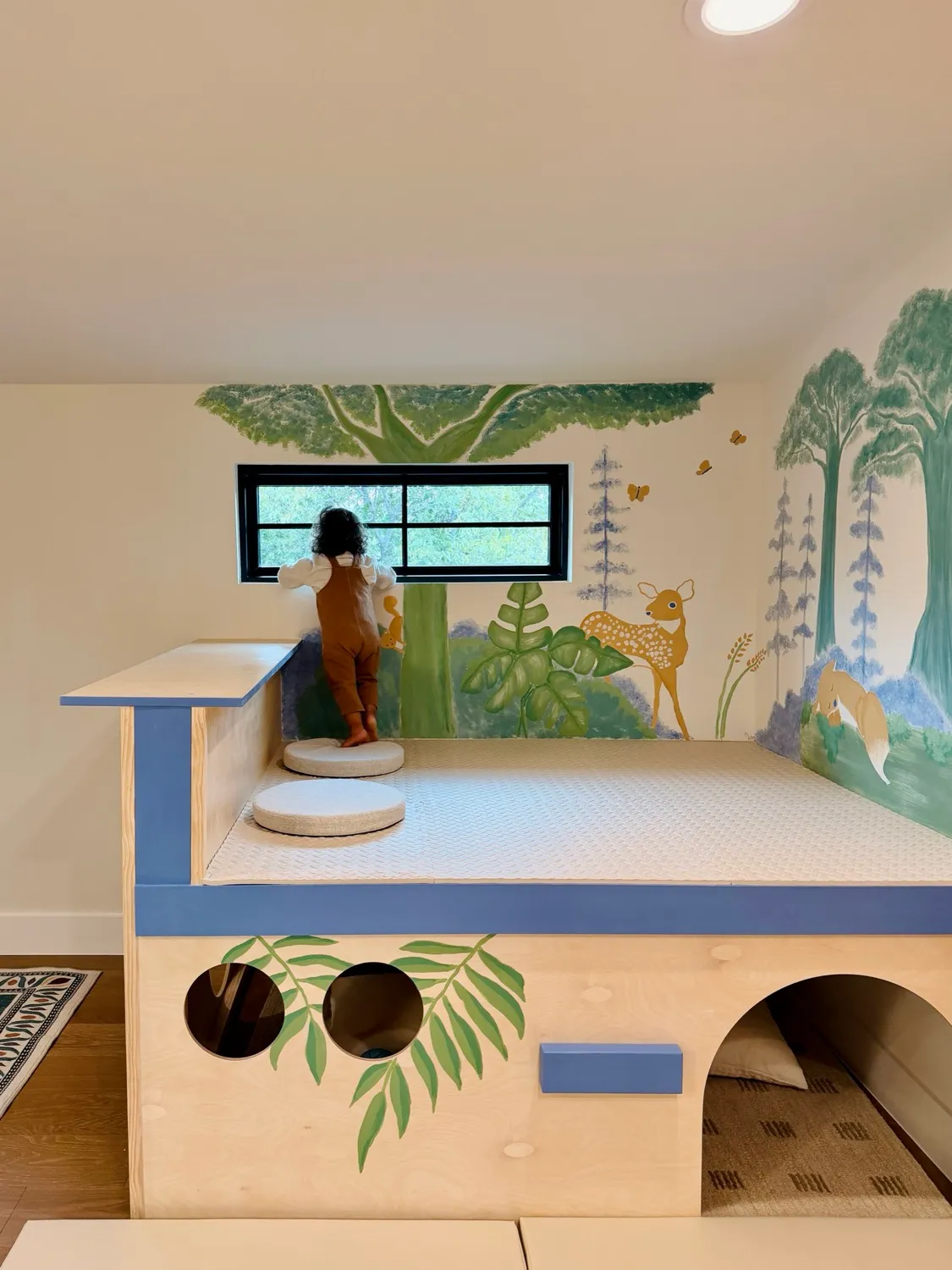
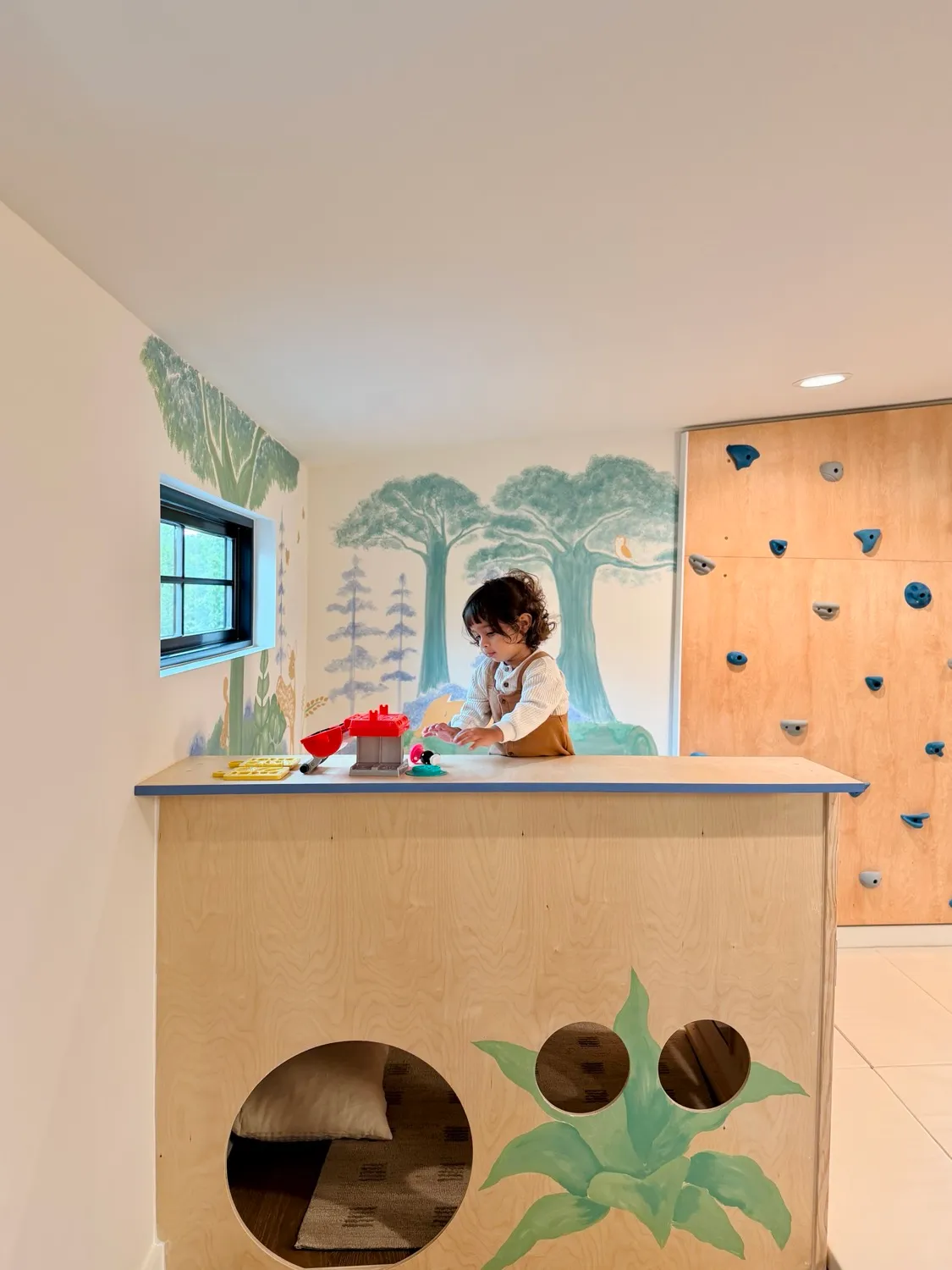
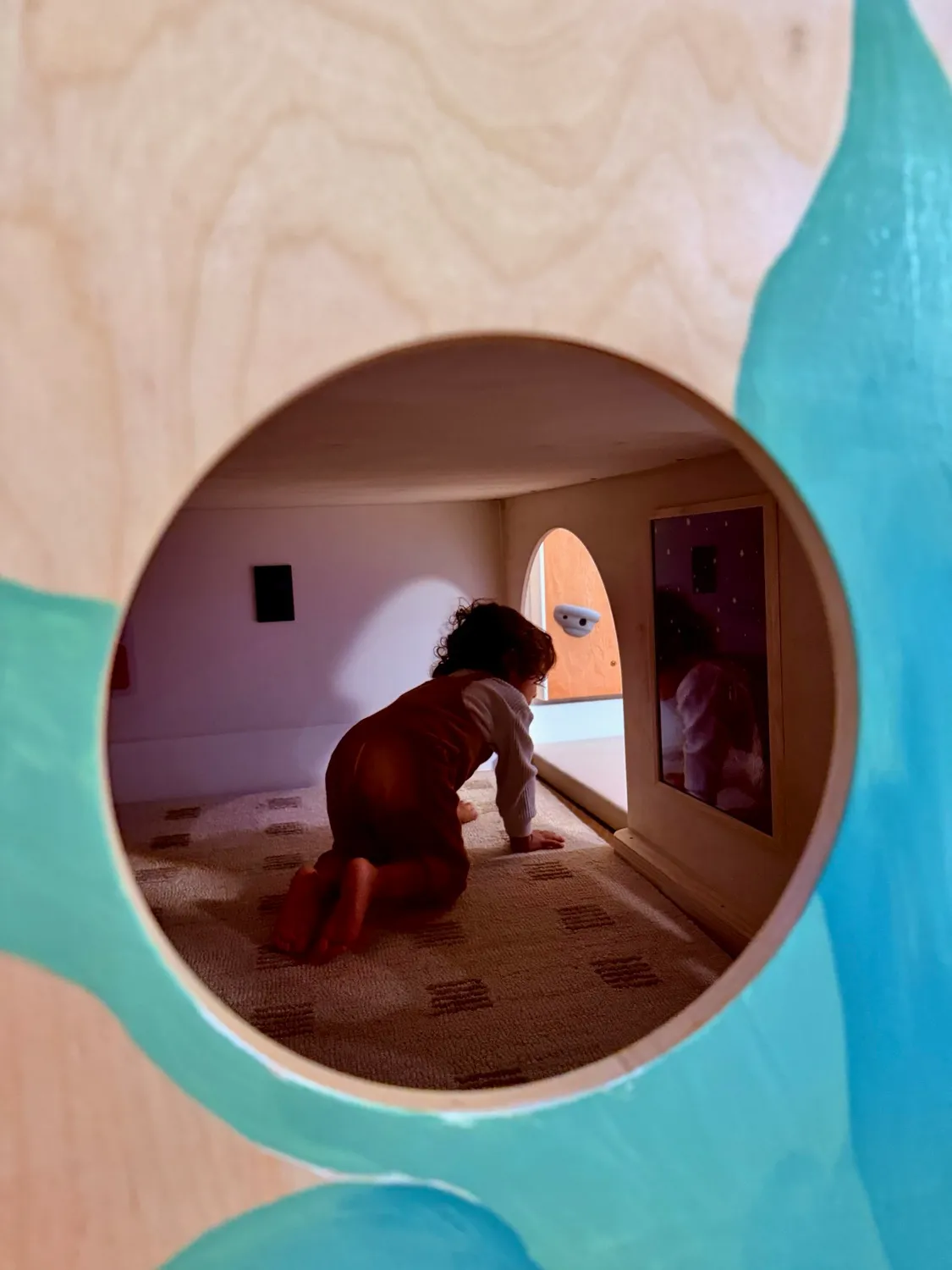
One platform offered four different invitations: movement, imagination, creativity, and quieter moments. And as the children grow, we imagine those possibilities will evolve, too.
Perhaps the restaurant counter becomes a puppet theater. The launchpad becomes a stage. The little den becomes a secret clubhouse where friends gather.
That’s layered play in real life. We aren’t designing four separate activities. We’re creating one environment that leaves room for all four—and for the unexpected ideas children bring to it.
In a room where every inch mattered, that made all the difference.
Growing up shouldn’t mean growing out of the room.
There’s another important part of designing for growth: children get better at things.
The climbing route that once felt impossible eventually becomes familiar. The monkey bars that required enormous concentration begin to feel easier. And that little platform they were so proud to reach? Before long, they have entirely different plans for it.
Developmental researchers have long recognized that children’s play changes as they grow. In their 1998 review of play across childhood, Pellegrini and Smith explored how physical, imaginative, and social forms of play develop and serve different purposes at different stages.
For us, that raises an important design question: How can a space continue offering meaningful experiences as a child’s abilities and interests evolve?
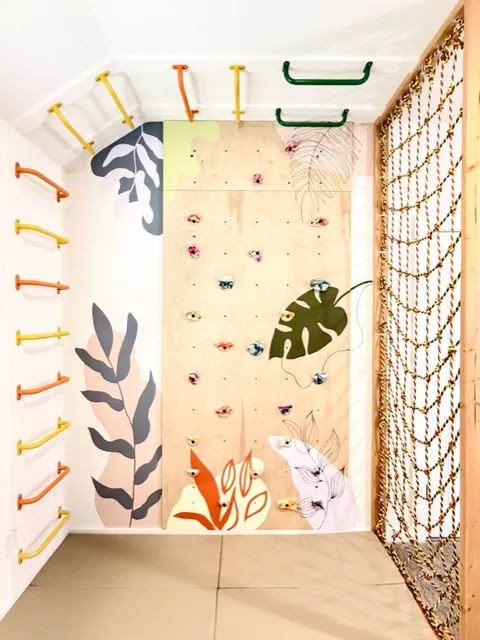
Sometimes, the answer is progression. A climbing wall might offer appropriately graded routes that introduce new challenges as a child develops strength and coordination. A creative corner might begin with chunky crayons and finger painting, then evolve into a space for detailed drawings, building projects, or elaborate crafts.
Other times, growth has less to do with making an activity harder and more to do with allowing it to become something different. A platform that once inspired physical adventures might eventually become a reading perch or a favorite place to spend time with friends.
Of course, physical challenges must remain appropriate for each child’s abilities and the equipment’s intended use, with suitable safety measures and supervision. Designing for growth doesn’t mean making everything more difficult. It means anticipating new possibilities thoughtfully.
The most enduring play elements often have something in common: they don’t insist on being used just one way.
A little loft can become a lookout tower, a puppet stage, or a reading nook. A drawing wall can hold first scribbles, family masterpieces, and increasingly elaborate ideas. A cozy cave can become a secret hideout, a woodland den, or the entrance to an imaginary world.
And when these elements work together, children can create experiences we might never have thought to design for.
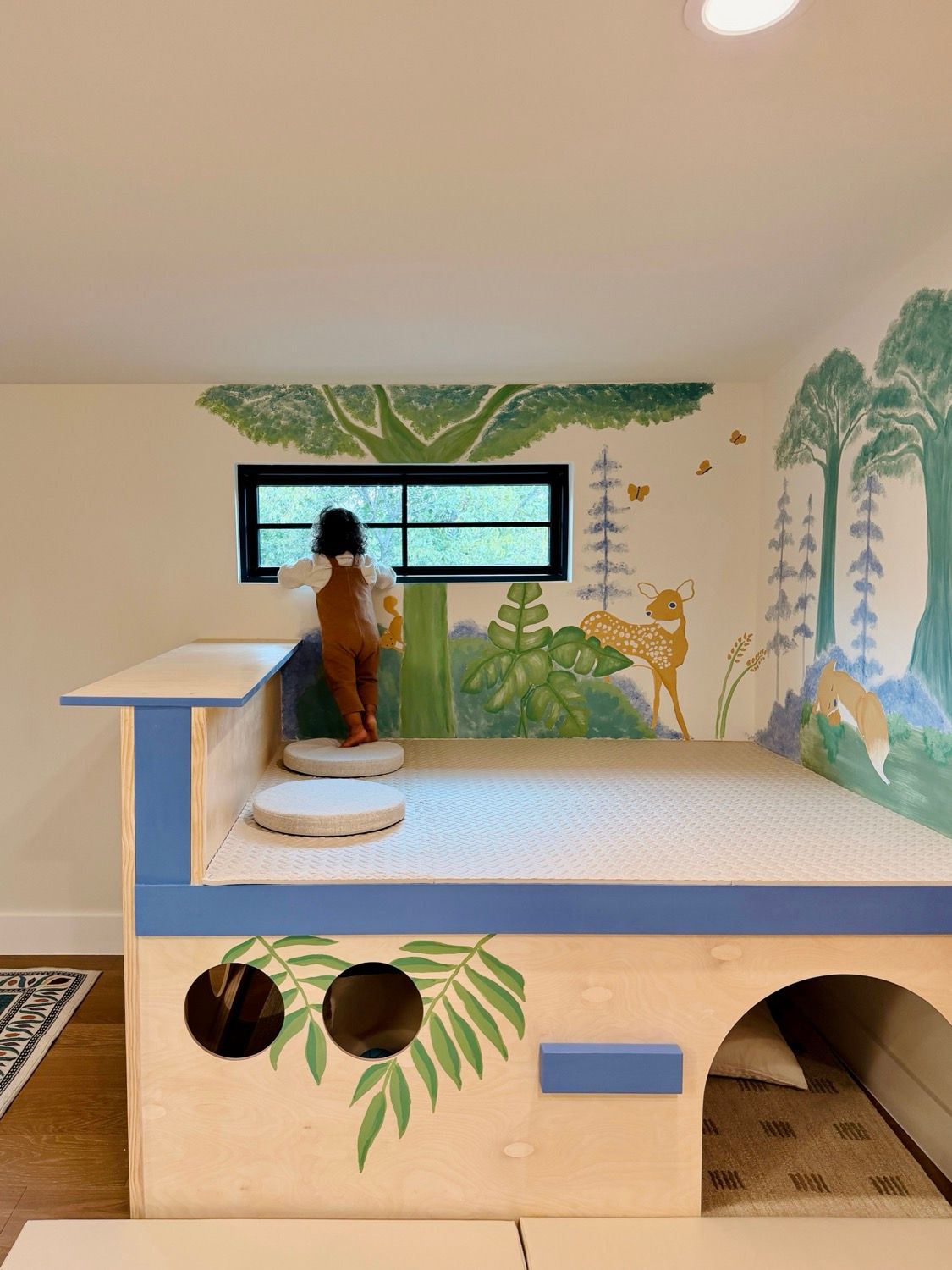
A little room for who they'll become
We can't predict exactly who our children will be in five years. We don't know which interests they'll discover, which challenges they'll master, or what imaginary worlds they'll dream up along the way.
But we can create environments that leave room for those possibilities.
A place where today's climbing adventure might become tomorrow's pirate ship. Where a little hideaway can be a quiet retreat one afternoon and the entrance to a magical kingdom the next. Where familiar spaces continue to offer new experiences as children grow.
Because a playroom that grows with them isn't simply a room they'll fit into for years.
It's a room they'll keep discovering.
And we think that's a rather lovely thing to design for. 💛
- Mao, F., Huang, F., Zhao, S., & Fang, Q. (2024). Effects of Cognitively Engaging Physical Activity Interventions on Executive Function in Children and Adolescents: A Systematic Review and Meta-Analysis. Frontiers in Psychology. Examines how physical activities incorporating cognitive challenges relate to executive-function outcomes. Read the study
- Thibodeau, R. B., Gilpin, A. T., Brown, M. M., & Meyer, B. A. (2016). The Effects of Fantastical Pretend-Play on the Development of Executive Functions: An Intervention Study. Journal of Experimental Child Psychology. Investigates the relationship between fantastical pretend play and executive-function development. Read the study
- Wei et al. (2024). Enhancing Young Children's Executive Function Through Physical Activities: A Three-Level Meta-Analysis. Mental Health and Physical Activity. Reviews evidence on physical activity interventions and executive functioning in young children. Read the study
- Pellegrini, A. D., & Smith, P. K. (1998). The Development of Play During Childhood: Forms and Possible Functions. Child Psychology and Psychiatry Review. Examines how different forms of play change throughout childhood. Read the study