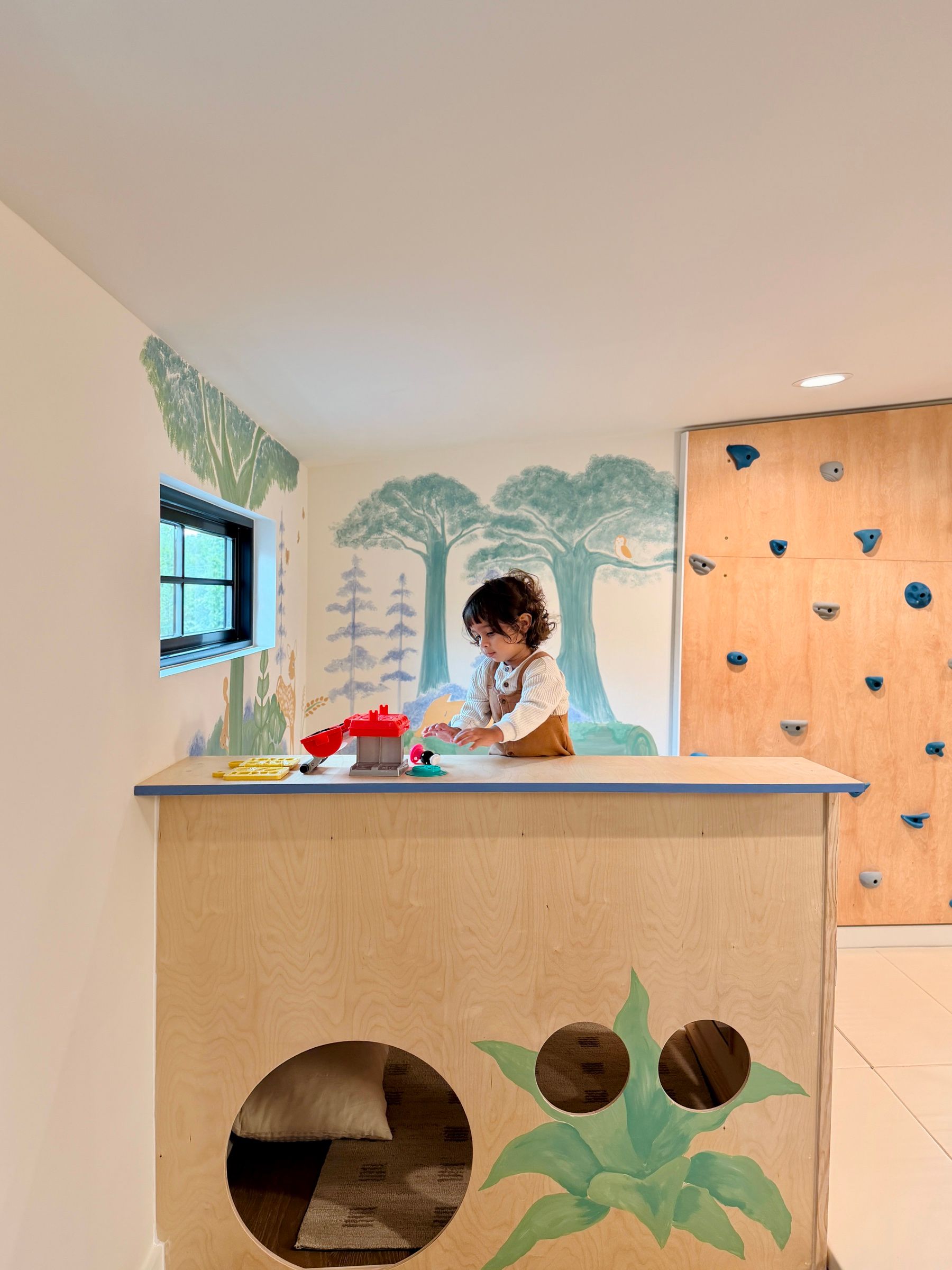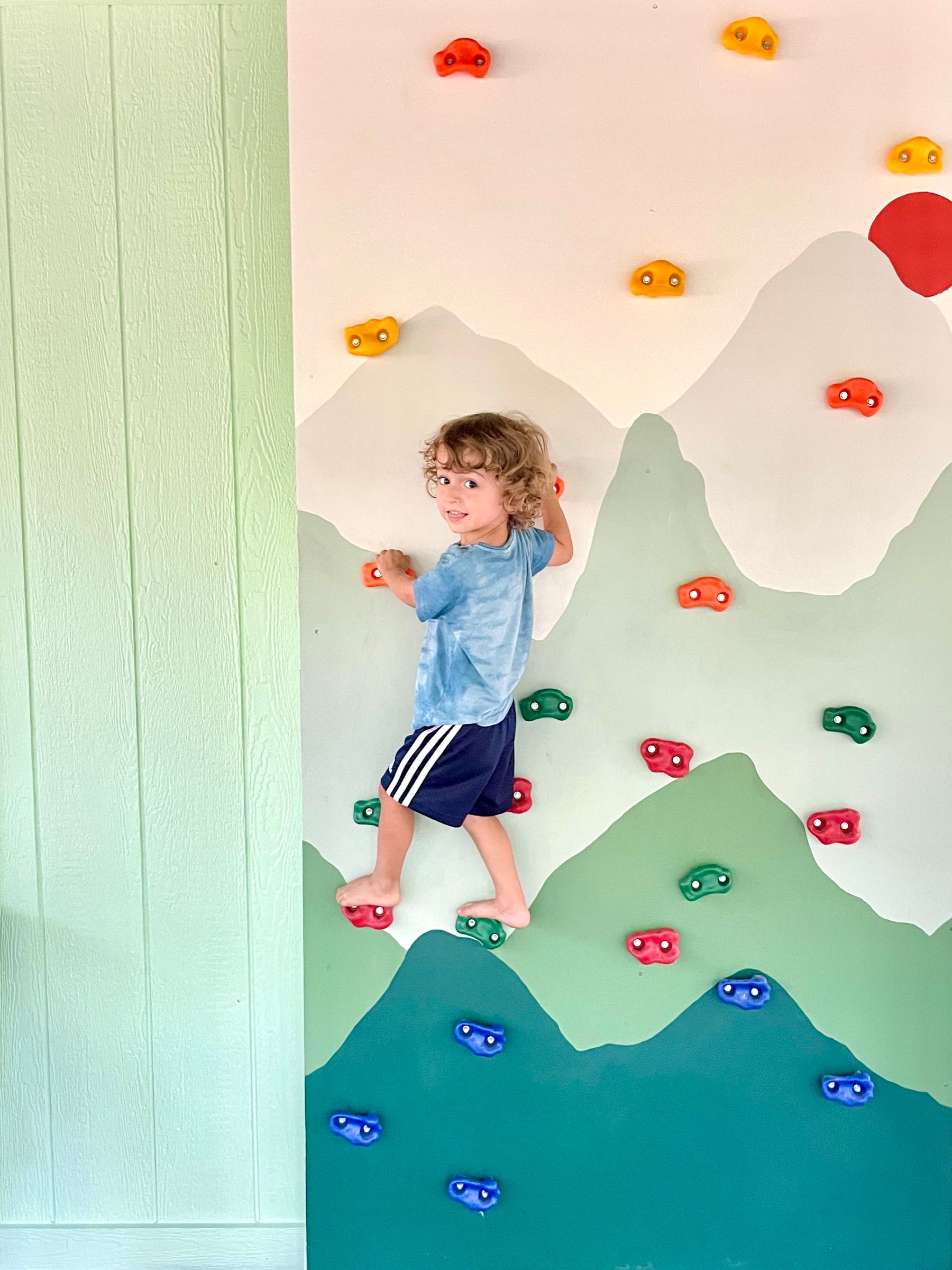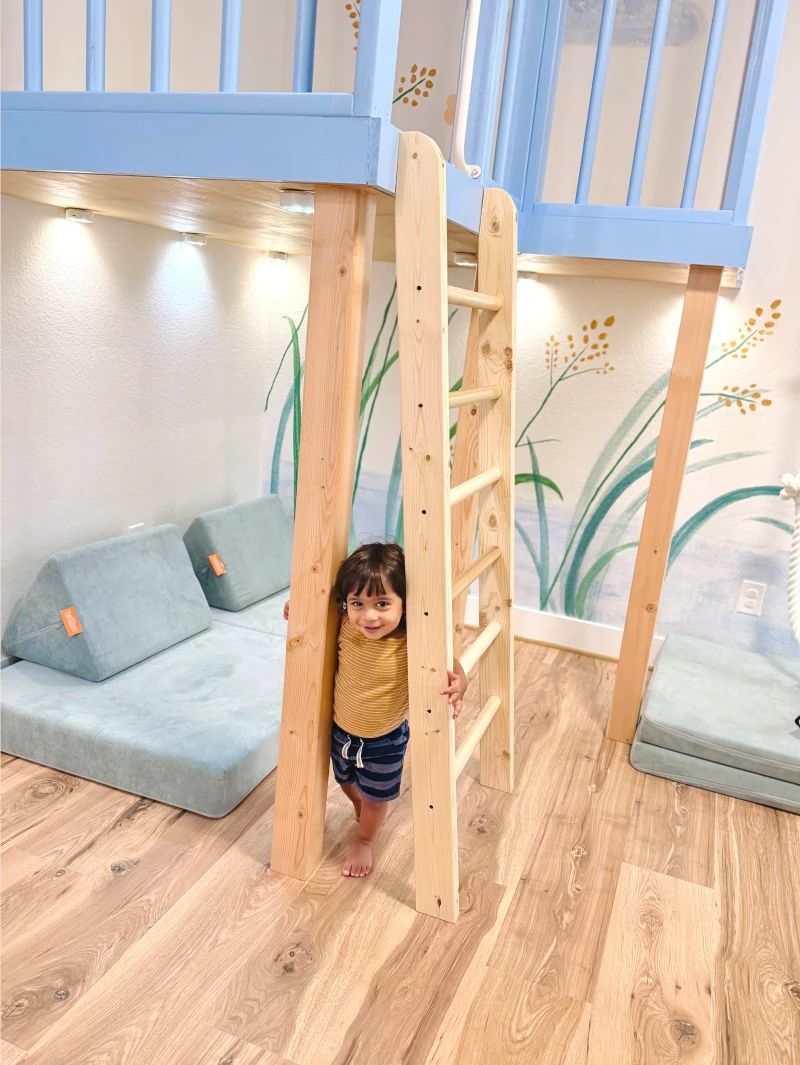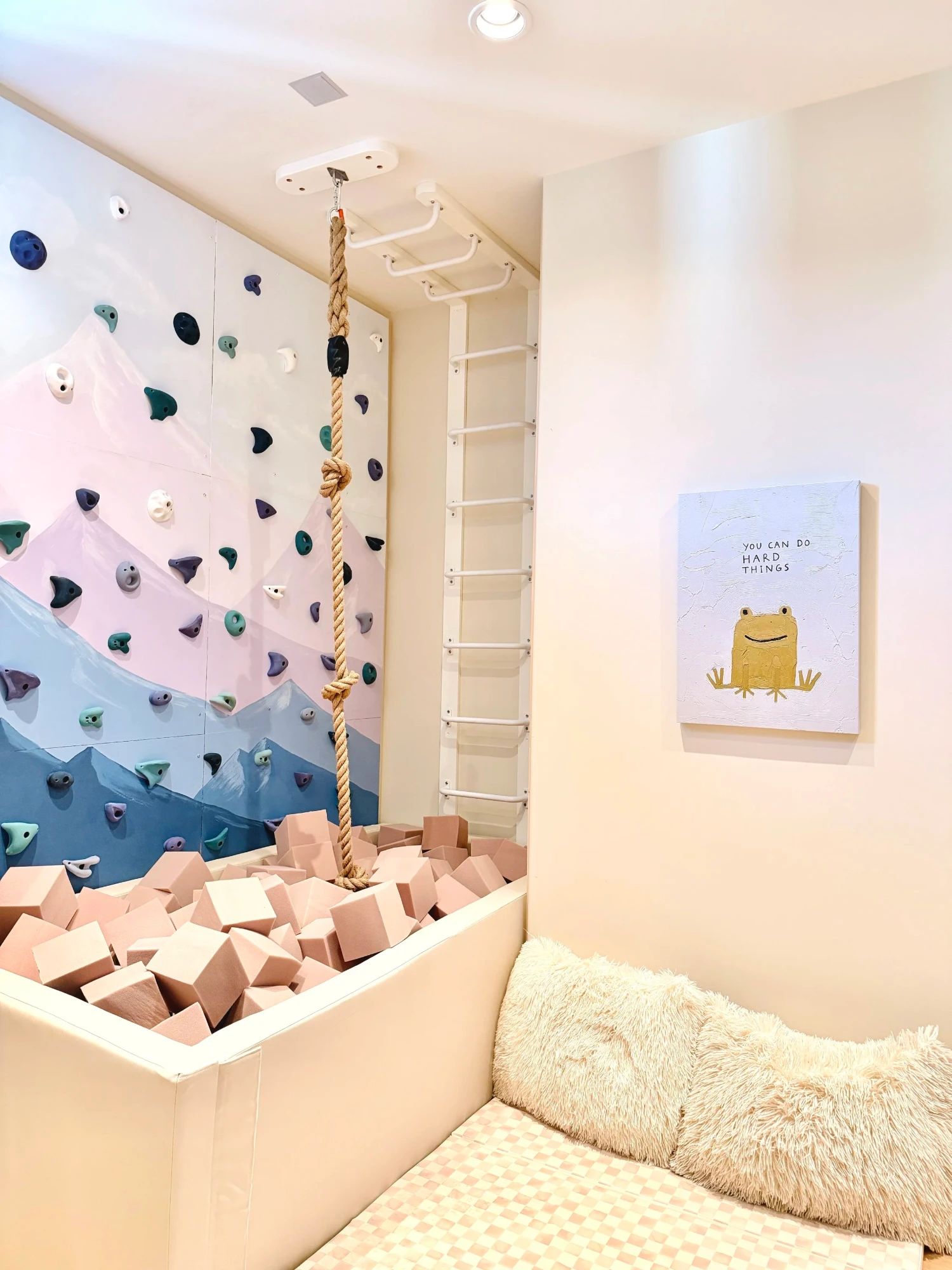

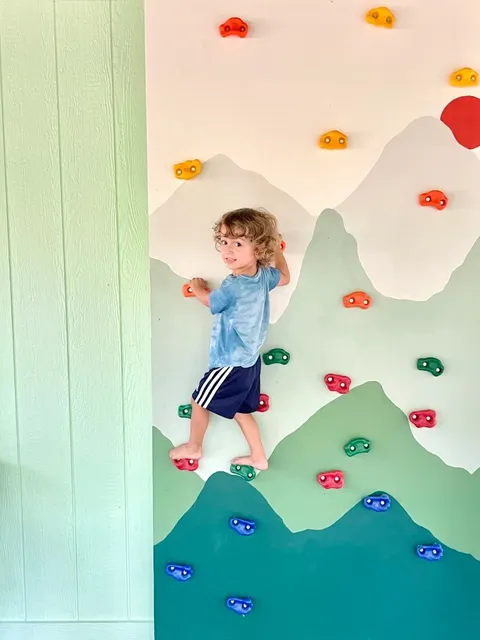


If you have a child who loves to move, you know the scene. They’re climbing the couch, jumping between cushions, hanging off furniture, and somehow turning the hallway into an obstacle course.
And while we’d all love to spend every afternoon at the playground, real life doesn’t always cooperate. Sometimes it’s raining. Sometimes it’s 105 degrees outside (hello, Austin summers). Sometimes you’re juggling work, dinner, and a dozen other things, and you just need your child to find something engaging to do that doesn’t involve a screen.
The thing is, children don’t stop needing movement just because they can’t get outside. And our homes aren’t always designed to accommodate it.
A little idea for a big problem
When I started Little Spaces, I heard from families who loved the idea of an indoor play space but simply didn’t have an entire room to dedicate to one. Some lived in smaller homes or downtown Austin apartments. Others had a home office, a shared bedroom, or just one awkward corner they could spare.
Their children still wanted to climb, jump, and swing. In fact, with less room to run around and fewer opportunities for outdoor play right outside their door, finding space for all that energy could feel even harder.
It got me thinking: What if we didn’t need a whole playroom? What if we could take one little wall, an unused corner, or a narrow nook and turn it into somewhere children could really move?
So we created the Little Spaces Movement Nook.
A compact, custom-designed movement space that brings some of the best parts of an indoor playground into your home, without taking over an entire room.
Because if your child is already bouncing off the walls, we might as well give them a wall that’s actually designed for it.
Meet the Movement Nook
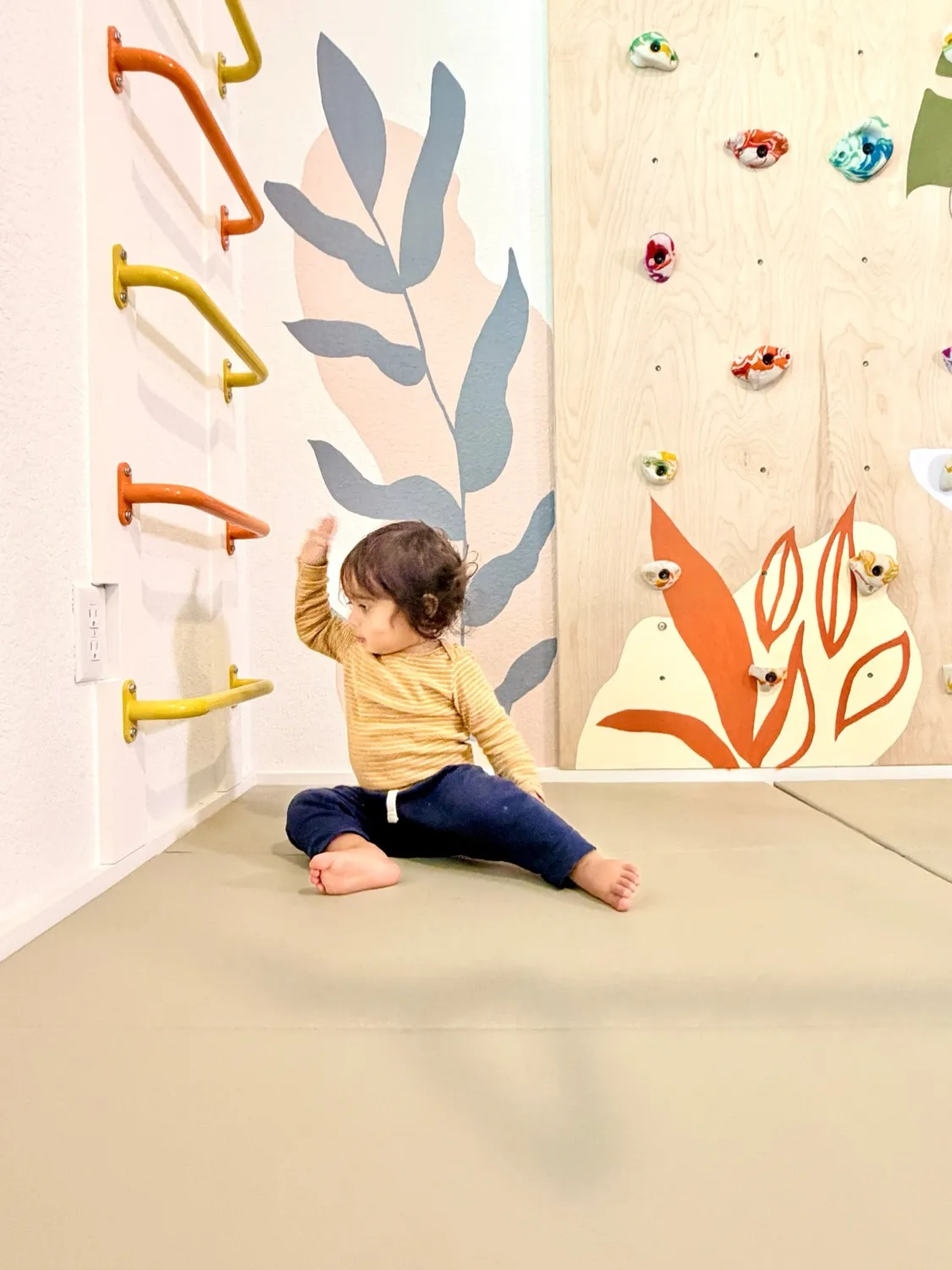
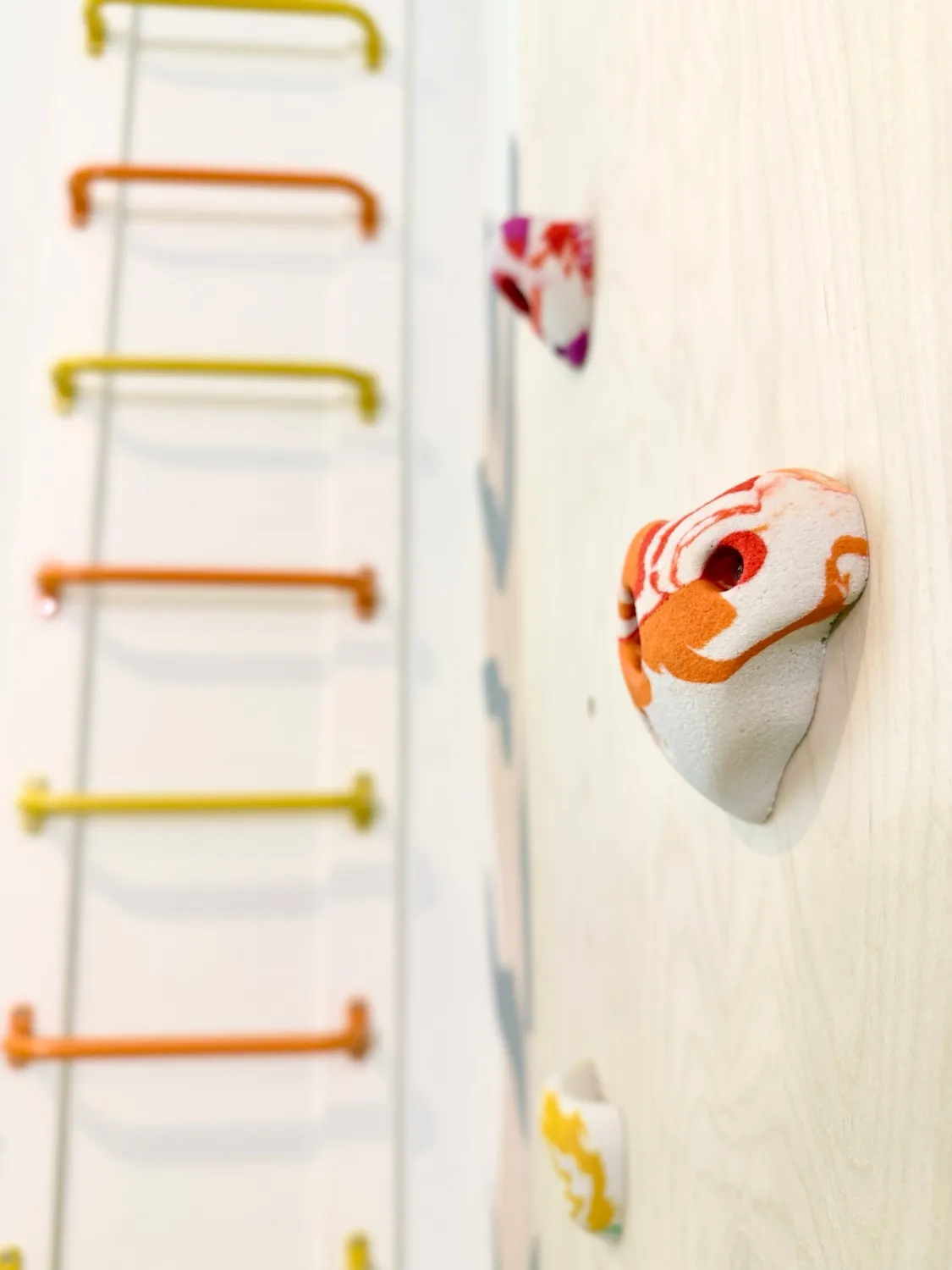
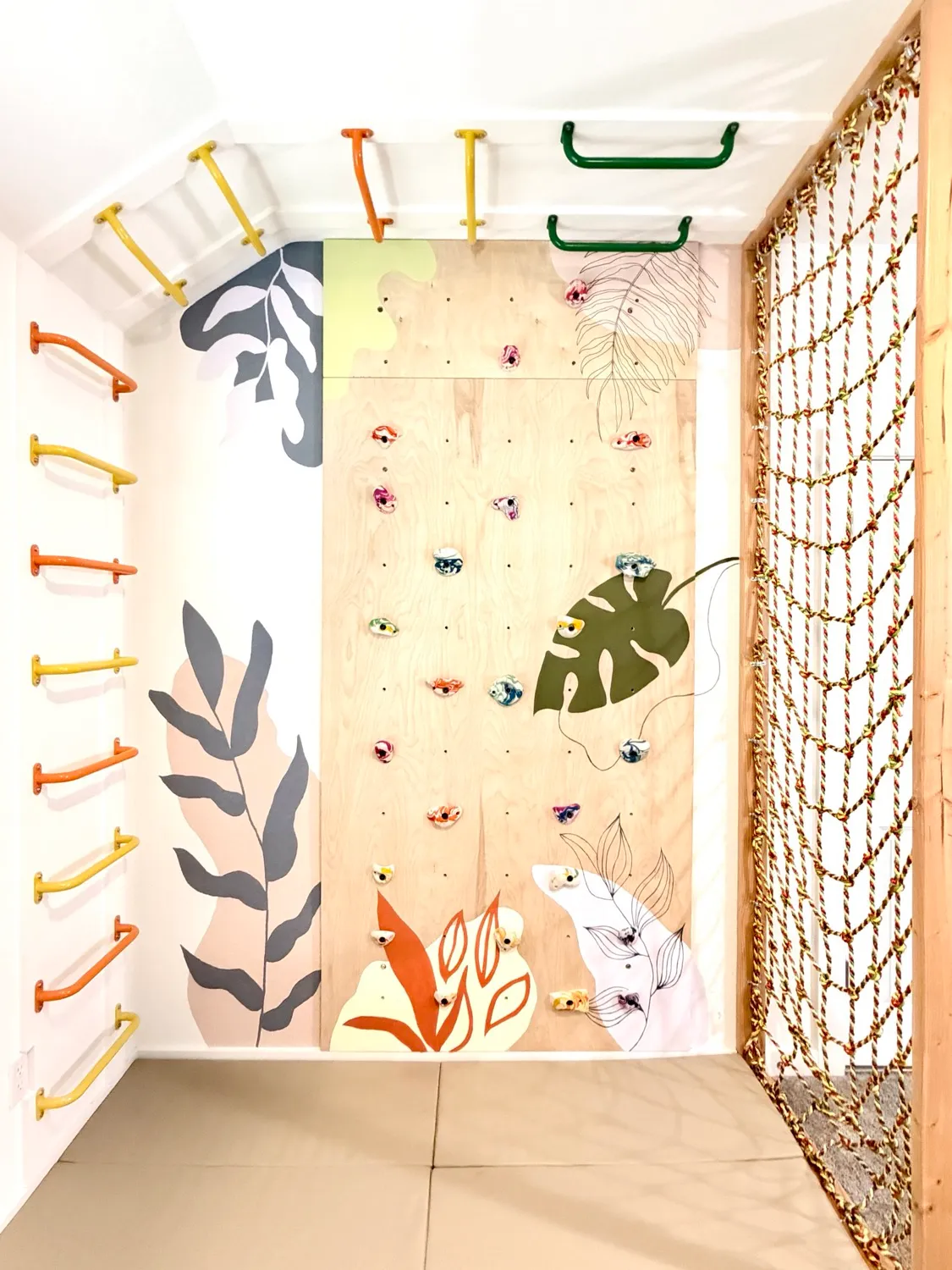
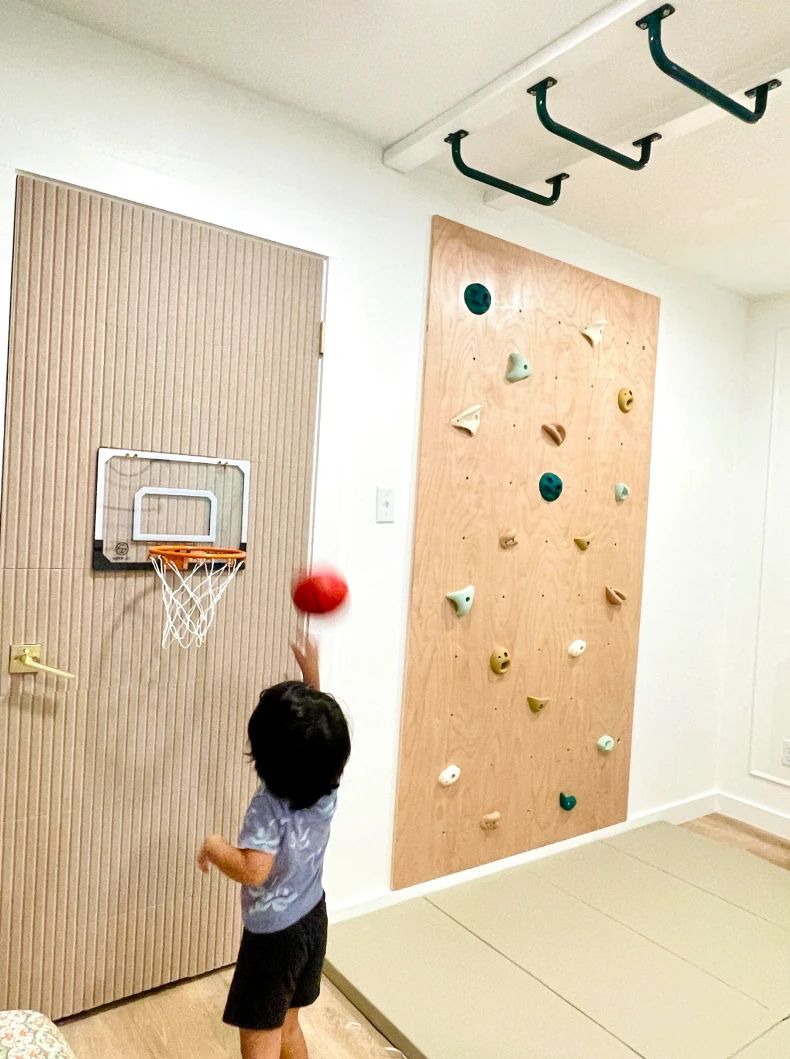
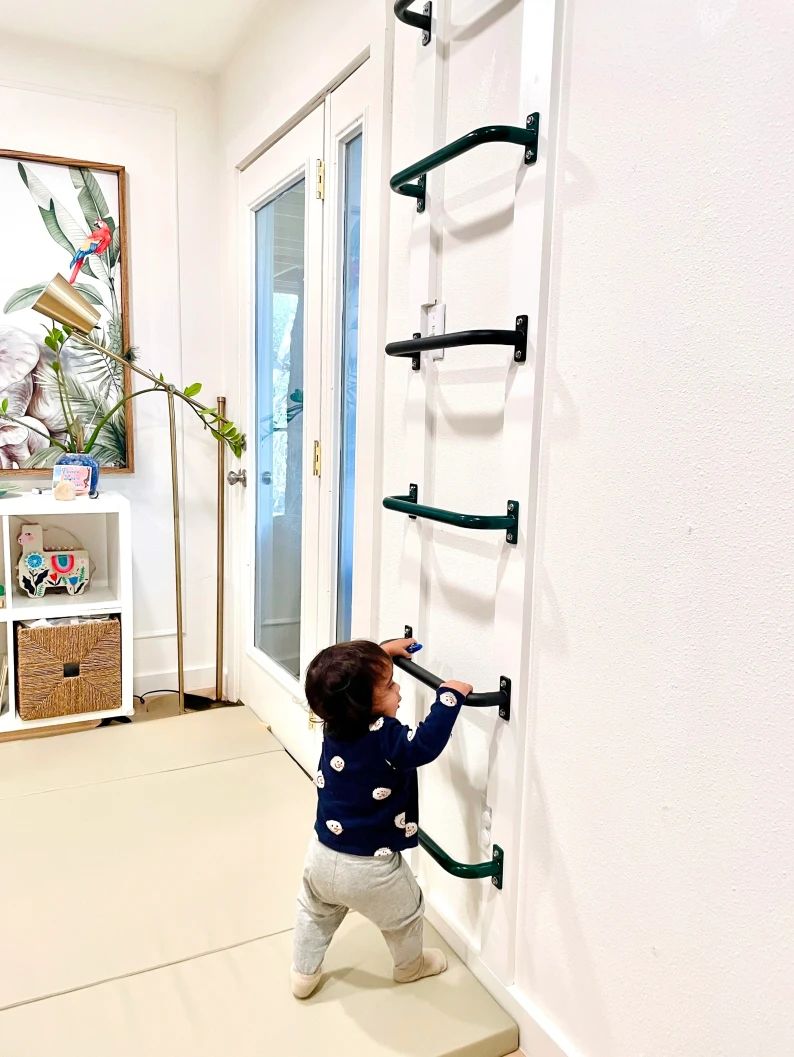
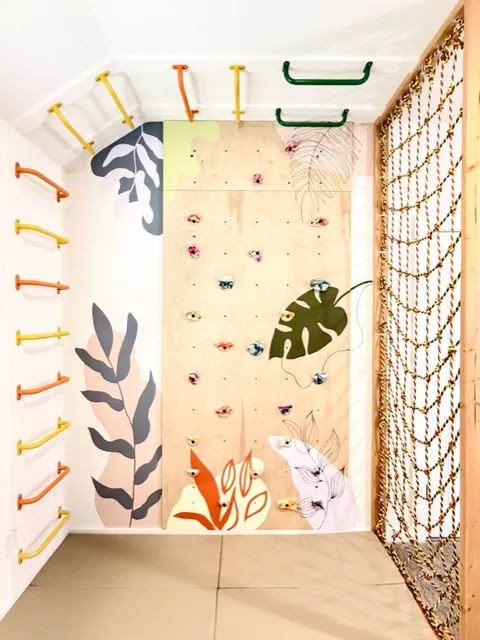
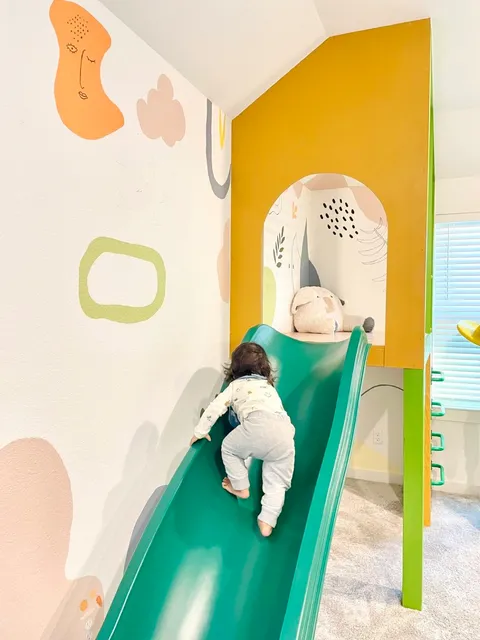
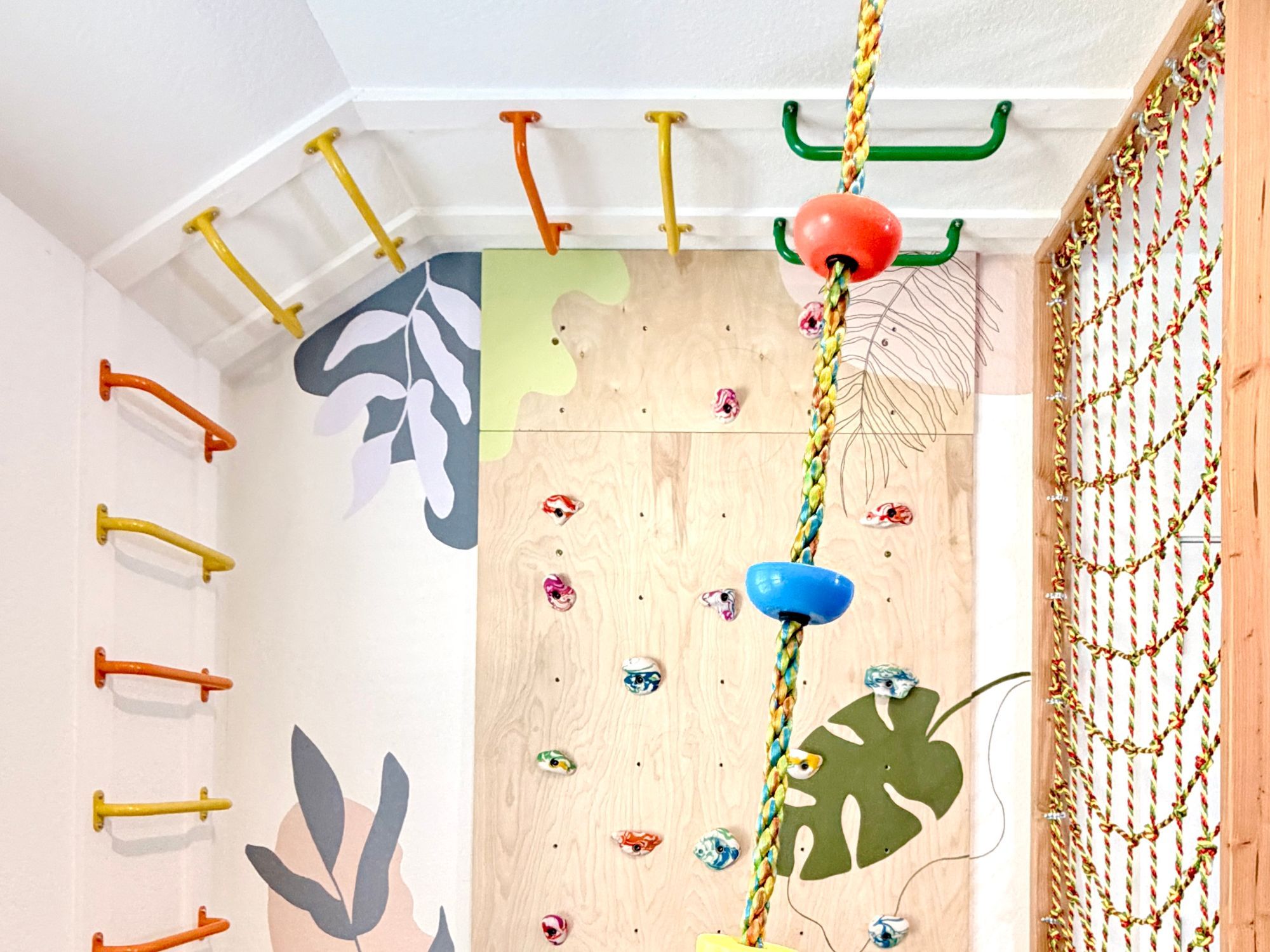
Think climbing walls, monkey bars, swings, and cushioned landing areas, thoughtfully combined within a small footprint.
Climbing, swinging, hanging, and jumping all offer children different ways to explore movement. Climbing challenges coordination and motor planning, monkey bars encourage upper-body strength, and swinging engages the body’s balance system. Pushing, pulling, and climbing also provide proprioceptive input—sensory information from muscles and joints that helps children understand where their bodies are and how they’re moving.
The American Academy of Pediatrics recognizes active play as an important part of children’s physical development and overall well-being. And while children benefit from opportunities to move, not every child gravitates toward the same activities.
Some are natural climbers, others love swinging, and some are happiest pushing, pulling, or tumbling around on a mat.
That’s why even our tiniest Movement Nooks are designed around the child, choosing the experiences they’ll actually enjoy.
We look at the available space, understand how your child likes to move, and create a setup that makes the most of both. It might fit along a bedroom wall, in a corner of your home office, or in another underused part of the house. Even a hallway or closet-sized area may offer possibilities, depending on the structure and available clearances.
Not every feature will fit every space, but that’s part of the design process: finding the right combination of movement experiences for the child and the home.
You don’t need a whole playroom to make room for movement.
Bringing the playground home
One of the things I love about raising kids in Austin is how much of our lives happen outdoors. We’re lucky to have beautiful parks, trails, and playgrounds. But between our scorching summers, unpredictable weather, and busy family schedules, there are plenty of days when getting outside just isn’t happening.
And that’s where having movement at home can be wonderful.
A Movement Nook gives children a dedicated place to climb, hang, swing, and explore physical challenges. Somewhere they can return to throughout the day, whether they’re looking for a little adventure or simply need an engaging break from sitting.
It’s also a more appropriate alternative to climbing furniture that was never designed for play.
And perhaps my favorite part? It doesn’t require sacrificing an entire room.
Just a little space, thoughtfully reimagined.
Big energy doesn't need a big room
Our homes have places to eat, sleep, work, and relax. Why not make a little room for movement, too?
You don't need a dedicated playroom or a big backyard. Sometimes, one overlooked corner is all it takes to give childhood energy somewhere wonderful to go.
Big movement. Little spaces. 💛
- Yogman, M., et al. (2018). The Power of Play: A Pediatric Role in Enhancing Development in Young Children. Pediatrics, American Academy of Pediatrics. Explores the importance of developmentally appropriate play in supporting children's physical, cognitive, and social-emotional development. Read the report